
Journey's From the Ice: Pauline Herbommez
Stepping off the plane onto the blue runway, the wax-like ice gleaming under high summer sun, I paused. Robert Swan’s warm embrace as he welcomed us to Union Glacier Basecamp pulled me back into a pristine new reality. I did not yet know that I was about to experience a suspended slice of life—one that would connect me deeply with the beauty of this continent, and with its profound fragility.
Antarctica: four poetic syllables naming a land where time stops, and silence reigns like a gentle queen. As part of the Ice Station Expedition, Agustina Bozzano (Villars Institute) and I (Eton College) were shown to the tent we would share, named after Lawrence Oates, the selfless British Antarctic explorer, Old Etonian, and member of the Terra Nova expedition.
Oates sacrificed himself by stepping into a blizzard to avoid slowing his companions, telling them, “I am just going outside and may be some time.” Knowing our tent carried the name of such a good role model who had studied at Eton College felt like a happy coincidence that made me proud. From the very first evening, as we found ourselves surprisingly comfortable around delicious food, it became apparent that this place calls for exceptional people. During our camp tour, we learnt how the Union Glacier team set high environmental standards: all human waste is removed from Antarctica. Liquid and solid waste are separated for ease of transport, part of a system that honors the continent’s untouched nature.
How Antarctica Enters Your Bones
One of the most shocking aspects of our expedition was that it was simply too warm. We had prepared for temperatures between –11°C to –25°C; instead, most days hovered around –5°C. We recorded videos in a single layer, sometimes forgetting our gloves but never our sunscreen.
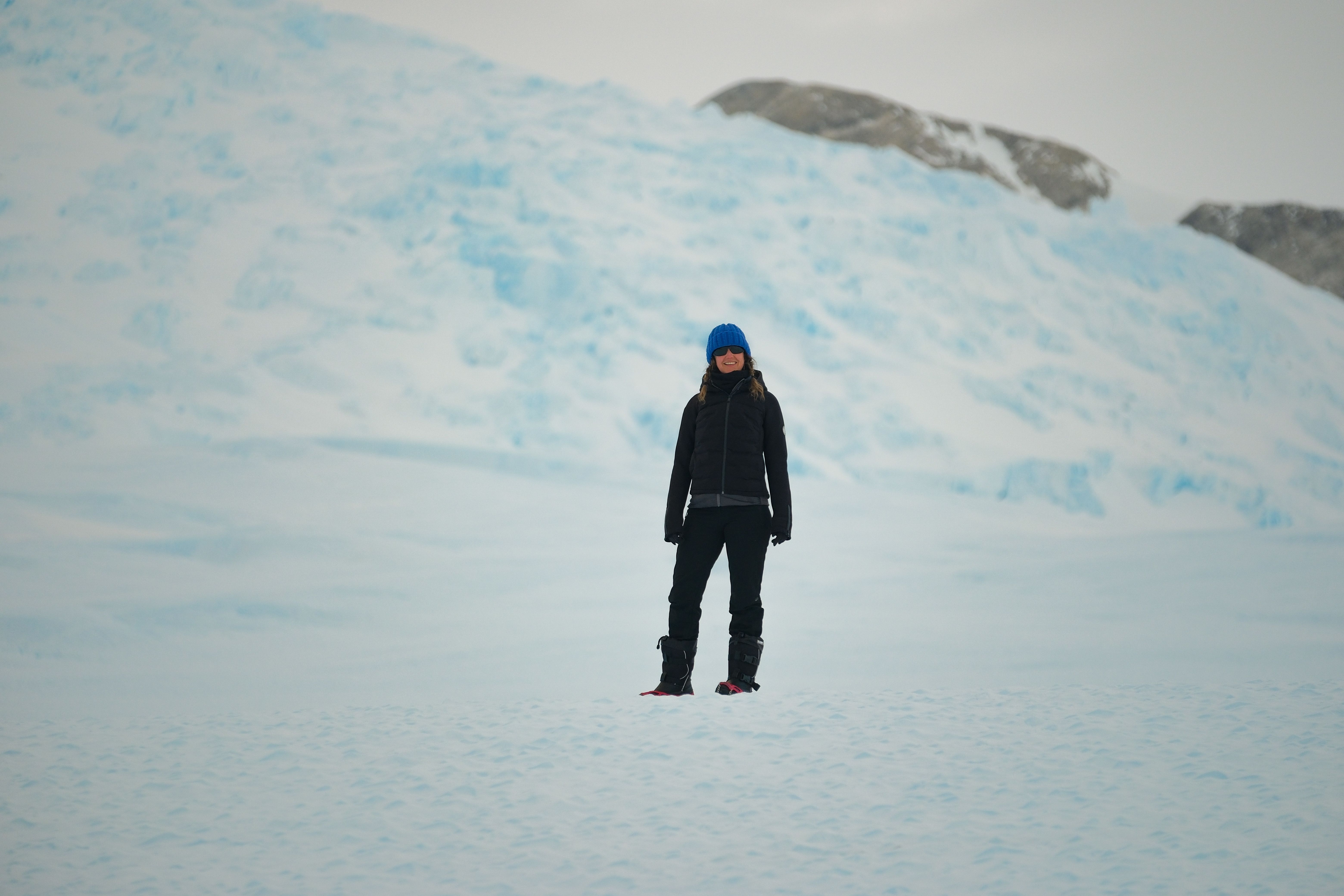
Our first local expedition—to Windscoop—was when Antarctica truly took hold of me. Wearing spikes, we walked across a landscape of glass-clear ice where trapped air bubbles glimmered deep beneath our feet. The ice formed a translucent busy underworld: nature’s flawless artistic hand revealed at a scale beyond imagination. The wiggling shapes and delicate patterns we observe are busy and still at the same time. No human artist could ever rival the beauty unfolding beneath our hesitant steps.
We spoke with scientists devastated that their research funding had been cut, making this their final season in Antarctica. We interviewed polar guides who spent their lives guiding expedition teams to the South Pole, losing many friends along the way to the harsh conditions of this unforgiving land.
Others were shaken by the rapid warming they had witnessed firsthand, climbing without gloves for the first time in their careers.
I met Dwayne Fields, Chief Scout of the UK Scouts, along with Darren Edwards, Lucy Shepherd and Matthew Biggar, who were attempting to redefine the impossible. They tried reaching the South Pole with Darren completing the longest sit-ski expedition in the history of Antarctic exploration.
Sharing a camp with such remarkable people was energizing— so energizing that the 24hour daylight made it tempting to stay awake all night listening to stories or even go skiing until 2 a.m.
Carbon Under Rising Heat
When Robert was first travelling 600 miles from the South Pole in 1986, temperatures were around –22°C. Antarctica is warming at twice the rate of the rest of the planet.
Sea ice is vanishing, erasing the algae beneath it—algae that feeds krill, which in turn feeds penguins, seals and whales. If the ice sheets of both poles were to melt completely, sea levels could rise by 60 meters. Ocean salinity and acidity would shift dramatically, threatening marine life and food security for millions.
Whenever I stepped away from the whirlwind of school livestreams, interviews with scientists, and overnight treks, guilt crept in. How could we ignore the emissions involved in coming here? How many others might we inspire to fly to this fragile land, worsening its destruction?
This trip cost roughly five tons of carbon per participant—the equivalent emissions of five Indian families for an entire year. Robert Swan, who leads the expedition, assures us that Barnaby (his son) offsets these emissions through tree-planting projects in the rainforest via Climate Force. Yet the tension remains.
Greenland’s rapid melt is opening new shipping routes and exposing resources, yet rather than raising alarm, it is attracting commercial interest creating tension between countries. How have we become so numb to planetary danger?
Nature is resilient, but for how long under the weight of human greed?
We are torn between two imperatives: the urge to explore, connect, and witness our world; and the responsibility to slow down, to do less to protect our planet. Travel contributes to the destruction of the very places we cherish. So how do we find balance? Must we sacrifice exploration to preserve wild places?