


Taking Stock: Where Are We on the Road to COP 17?
The discussion opened with an assessment of current progress in biodiversity disclosure under the GBF. While there was broad optimism regarding the growing prominence of biodiversity within public and private decision-making, concerns remained about fragmentation, implementation gaps and the pace of progress.
Positive Signs: The Optimistic View
Despite wider concerns about the state of multilateralism, participants highlighted several encouraging developments. An estimated 143 countries have committed in some form to Target 15 (disclosure) of the GBF, while 125 countries—almost two-thirds of the Convention’s 196 parties—submitted national reports by the February deadline. A new set of indicators is now being used to track progress against the GBF, and efforts are underway to align these with metrics used across different reporting communities. This convergence was viewed as an important step towards reducing duplication and establishing a common language for biodiversity disclosure. Target 15 was repeatedly cited as a particularly significant milestone, providing a potential foundation for more consistent disclosure practices. Given that all businesses both depend upon and impact biodiversity, participants noted that biodiversity reporting is increasingly being viewed as a mainstream business issue. Its inclusion among the World Economic Forum’s top global risks was cited as evidence of this shift. The discussion also highlighted the GBF’s emphasis on a whole-of-society approach, which extends beyond governments to include businesses, investors, civil society organisations and other non-state actors. Biodiversity disclosure was described as gaining traction in regions where regulatory frameworks and investor expectations are strongest, including Europe, North America and parts of Asia. More than 750 organisations have now voluntarily adopted the recommendations of the Taskforce on Nature-related Financial Disclosures (TNFD). With an increasingly large share of global capital represented through these adopters, it was suggested that the TNFD framework could emerge as a de facto standard for biodiversity disclosure in financial markets.
Challenges and Roadblocks Remaining
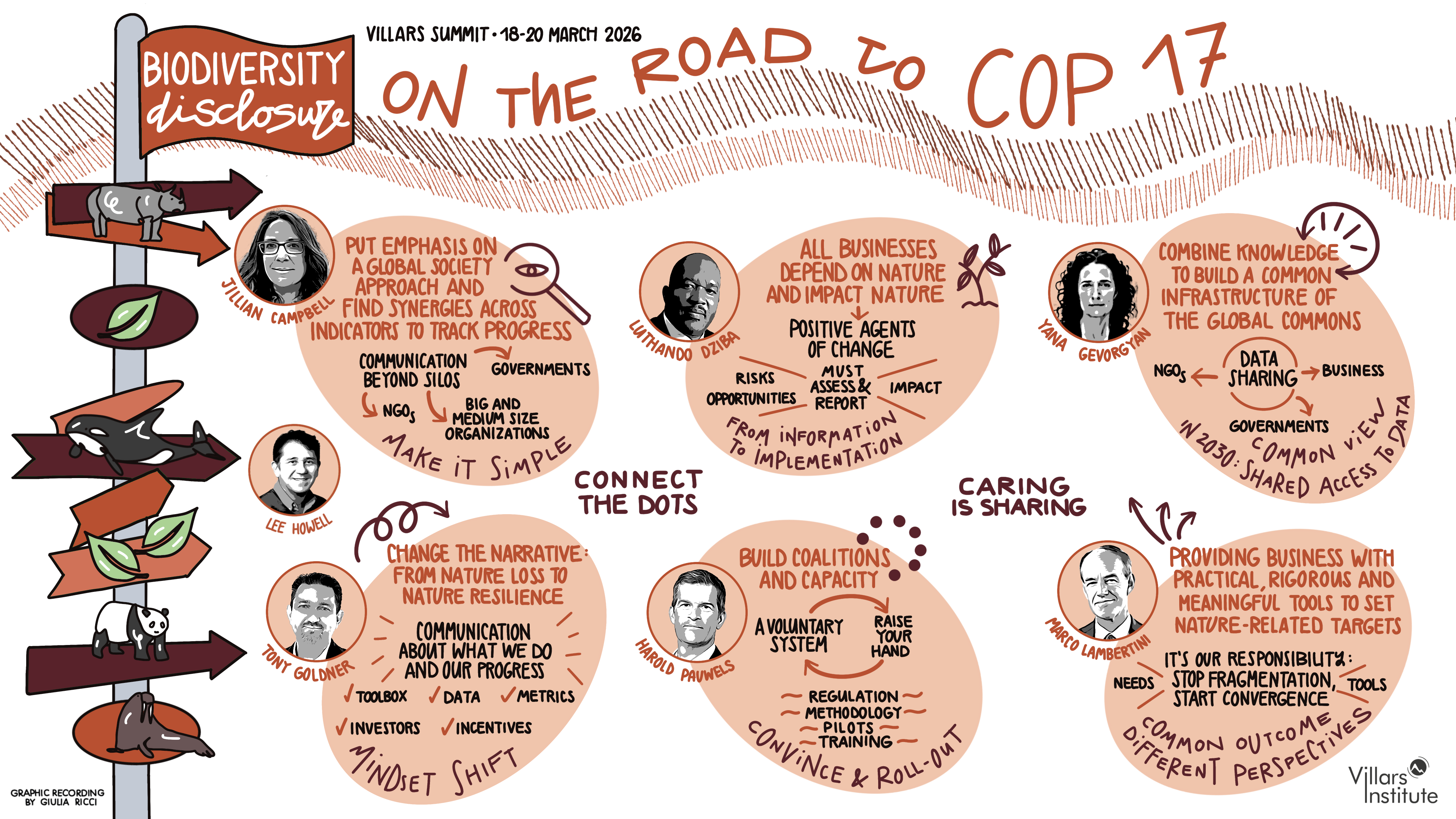
Despite this momentum, participants agreed that governments, businesses and NGOs often continue to operate in silos, limiting opportunities for collaboration and information sharing. Data and information are therefore not always pooled effectively, even when they already exist. It was noted that many countries struggling to meet their reporting obligations could potentially access information already collected by companies, NGOs or research institutions. As a result, the principal barriers were seen as political and institutional rather than technical. Nevertheless, significant scientific knowledge gaps remain. Understanding of some ecosystems—particularly the deep ocean—remains incomplete, making it difficult to establish reliable baselines and measure progress. Questions such as how much subtropical forest has been restored since 1975 remain challenging to answer with confidence. At the same time, the growing number of methodologies and frameworks was identified as a source of confusion, particularly for small and medium-sized enterprises (SMEs). Faced with an expanding range of tools and reporting options, many organisations struggle to determine which approaches are most appropriate. Measurement complexity was also seen as a barrier to action. While awareness of biodiversity-related risks is growing, many businesses still lack the confidence to translate that awareness into practical decision-making. To address this challenge, tools and frameworks were seen as needing to become more credible, affordable and relevant to business needs, helping to bridge the gap between scientific rigour and practical usability.
Accelerating Change: What Needs to Happen?
After assessing the current landscape, the discussion focused on four themes considered essential for accelerating progress: shifting the narrative, converging tools and standards, building shared data infrastructure, and forging coalitions.
Shifting the Narrative
Participants emphasised the importance of moving away from a narrative centred solely on nature loss and towards one focused on nature resilience. It was suggested that businesses are more likely to act when they understand that their long-term commercial resilience is closely linked to the health of natural systems. Similar comparisons were drawn with cybersecurity, where investment became widespread once organisations recognised the risks posed to their operations. Accordingly, participants suggested that biodiversity disclosure may gain greater traction when framed in terms of business resilience, risk management and long-term value creation, rather than relying exclusively on appeals to environmental responsibility. There was also broad agreement that imperfect solutions should not become an excuse for inaction. Existing tools may not be flawless, but they are increasingly capable of supporting meaningful progress.
Converging Tools and Standards
The discussion highlighted the importance of simplifying complexity wherever possible. Bringing businesses on board requires not only robust methodologies but also coherence across frameworks and standards. The emerging Nature Measurement Protocol was discussed as an example of efforts to bring together key stakeholders around common purposes, use cases and metrics. Greater convergence across reporting systems was viewed as essential for building confidence, reducing duplication and lowering barriers to participation.
Building Shared Data Infrastructure
One of the more ambitious ideas raised was the creation of a shared global knowledge infrastructure for ecosystems. Such an infrastructure could combine data from governments, businesses, NGOs and scientific institutions into a common, queryable resource. Participants argued that this could significantly reduce inefficiencies associated with generating, locating and accessing biodiversity data. At a time when climate and biodiversity challenges are becoming increasingly interconnected, there were calls for organisations to place greater emphasis on collaboration and data sharing in pursuit of common goals. A key question emerged: what incentives would be required to encourage organisations to contribute data and participate in such a system? There was support for creating follow-up mechanisms that could facilitate cooperation on data-sharing initiatives and the development of common knowledge infrastructure. Networks such as Villars were seen as potentially well positioned to convene stakeholders and support such efforts.
Forging Coalitions
Finally, the discussion highlighted the importance of coalitions and networks in translating ambition into implementation. Participants encouraged the use of platforms such as Villars to train practitioners, pilot initiatives, engage governments and scale approaches that have demonstrated success.
Throughout the discussion, collaboration emerged as a recurring theme. Whether through shared metrics, common data infrastructure, aligned standards or cross-sector coalitions, participants repeatedly stressed that progress towards meaningful biodiversity disclosure will depend on greater coordination across institutions, sectors and geographies.