
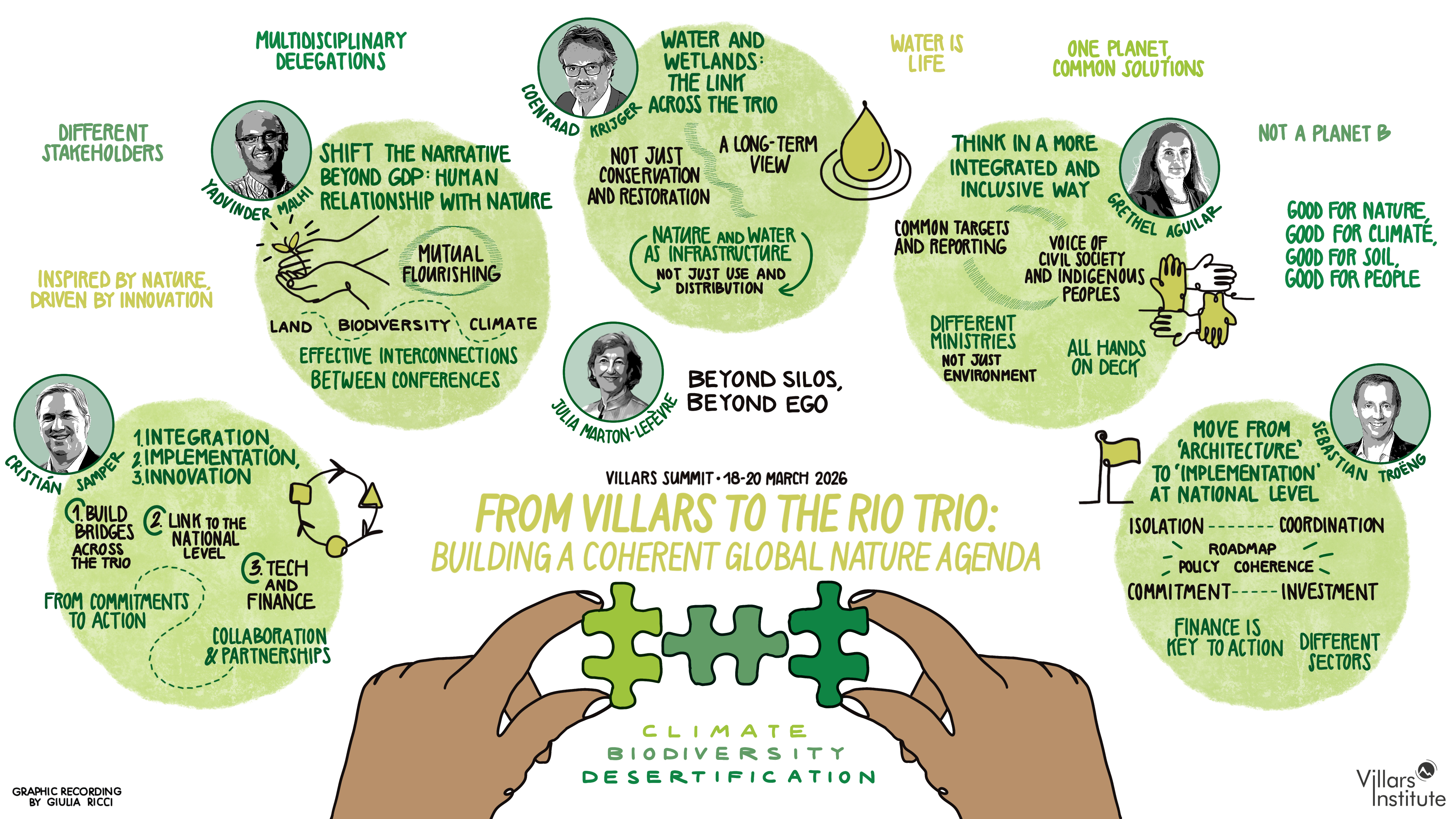


Ideas from the speakers
The panel discussion centred on the evolving architecture of global environmental governance, particularly the legacy of the 1992 Rio Earth Summit, which established three major international conventions: the Convention on Biological Diversity (CBD), the United Nations Framework Convention on Climate Change (UNFCCC), and the Convention to Combat Desertification (CCD).
While these frameworks were historically designed as distinct pillars addressing biodiversity, climate change and land degradation respectively, speakers argued that this separation does not reflect ecological or socio-economic realities. Instead, these systems are deeply interconnected and interdependent, requiring a more integrated and coordinated approach.
A central question posed was: how should a “new Rio” be designed today?
Speakers suggested that the original fragmentation of the conventions “never made sense”, as climate, biodiversity and land systems are inherently linked. The current dominance of climate change within global policy discussions risks marginalising biodiversity and land degradation issues. Therefore, a “marriage” of the three conventions is needed—one that ensures balance and avoids the supremacy of any single agenda. This integration should extend beyond land to include oceans, emphasising a holistic “landscape and seascape” approach. The concept of integration was further developed through proposals to align the Conferences of the Parties (COPs), potentially holding them in the same location and fostering coordinated decision-making. A unified framework with common targets and reporting mechanisms was seen as essential to improve coherence and effectiveness. Moreover, speakers highlighted the importance of linking the Rio conventions with other global institutions such as the World Trade Organization (WTO) and the World Health Organization (WHO), recognising that environmental challenges are deeply embedded within broader economic and social systems. A key theme was the shift from institutional architecture to implementation. While the global governance framework has matured, the gap now lies in translating commitments into action. Speakers emphasised the importance of national-level implementation, supported by coordinated strategies that align ministries of finance, environment, agriculture and economic planning. Namibia’s integrated approach to managing the “Rio trio” was cited as a promising example of interinstitutional, interdisciplinary and intersectoral collaboration. Stakeholder engagement emerged as another critical dimension. Effective environmental governance requires the active participation of communities, governments, the private sector and financial institutions. The “invisible hand” of finance and economic systems plays a decisive role in shaping outcomes, underscoring the need to mobilise both public and private capital. Innovation was identified as a key enabler, with the private sector contributing technological solutions and academia developing viable financial models. Finally, speakers stressed the importance of integrating scientific and Indigenous knowledge systems, recognising that both offer valuable insights for sustainable resource management. Policy instruments such as carbon and nature credits were identified as important drivers of implementation, while proposals to incorporate nature into the Human Development Index (HDI) reflect a broader effort to align development metrics with ecological sustainability.