


Ideas from the Speakers
The global financial system is undergoing a critical transformation, driven by an increasing commitment to climate-related investments. While funding for sustainability initiatives has grown significantly, most resources continue to be directed towards energy systems, with relatively little allocated to climate adaptation. Additionally, private capital remains largely absent. To sustain and enhance this momentum, financial systems must adopt new strategies that facilitate long-term investments and economic resilience.
One expert highlighted the need to develop a transition finance market that encourages capital movement towards sustainable investments. While efforts have been made to define "green" finance and promote disclosure standards, these measures alone do not mobilize sufficient funds. Instead, financial systems should implement strategies such as national sector pathways, blended finance models integrating public and private investment, and streamlined financial regulations to eliminate inefficiencies. Examples from countries such as Uruguay, Chile, and Japan illustrate how well-structured financial frameworks can accelerate sustainable investment flows.
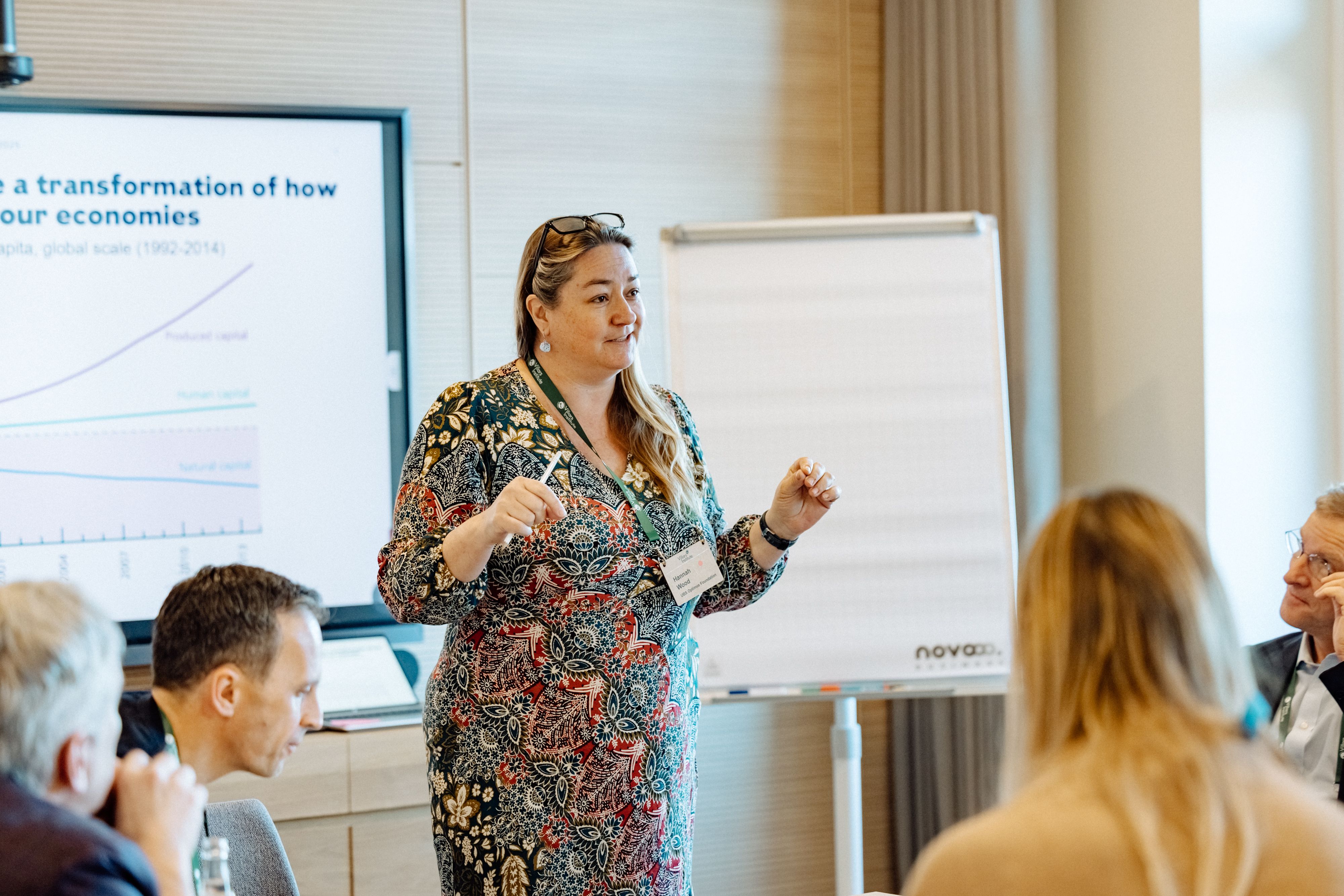
Another expert emphasized the need for the financial sector to rethink how it evaluates and measures economic success. Traditional metrics prioritize short-term profitability, often at the expense of long-term sustainability. A forward-looking financial model should integrate risk assessment, account for the economics of nature, and redefine wealth creation within environmental limits. By embedding these principles into investment strategies, financial institutions can support long-term economic stability while safeguarding natural ecosystems.
Philanthropy is another underutilized mechanism in economic transformation. One expert noted that while a growing percentage of next-generation wealth is being allocated towards philanthropic efforts, its potential remains underestimated. A shift in perspective is needed to demonstrate that philanthropy can generate tangible economic returns while driving systemic change. A holistic investment approach, integrating philanthropy with broader financial engagement, can help identify leverage points where financial interventions create lasting impact.
Wealth concentration presents a significant challenge to sustainable finance. A small percentage of the global population controls most of the world’s financial assets, and much of this private wealth is managed with a preference for liquidity. As a result, capital allocation to long-term, climate-focused investments remains low. One expert suggested that financial systems need to incentivize private investors to shift towards sustainable finance by adjusting investment benchmarks and broadening the scope of wealth management practices.
At the same time, the industry faces challenges in shifting to the dominant financial narrative. Climate finance is often framed as an economic sacrifice “we’re losing prosperity” due to increased environmental investments. A more constructive approach, as one expert suggested, would highlight how these investments secure long-term financial stability and economic growth. Reframing the discussion around investing in future prosperity rather than mitigating losses can help build momentum for sustainable finance.
Collaboration and communication across sectors are essential to drive this transition. Financial markets must work alongside policymakers, corporations, and philanthropic institutions to refocus investments within the existing system. Through regulatory innovation, wealth redistribution strategies, and integrated investment approaches, the financial sector can move towards a future where economic success is measured not only by immediate returns but also by long-term sustainability and prosperity.
Insights from the Audience
Participants actively contributed to the discussion, recognizing the urgent need to transform the economic and financial landscape. Conversations explored this shift through multiple lenses, including governance and corporate responsibility, technological innovation, and the role of the private sector. There was broad agreement on the necessity of cross-sector collaboration, with many emphasizing that meaningful progress requires coordinated efforts between governments, industries, civil society, and international organizations. Effective communication was seen as a critical factor in aligning these stakeholders, ensuring that financial strategies support both economic growth and long-term sustainability.
Several participants discussed the importance of shifting the financial narrative from one of loss to one of opportunity. They emphasized reframing climate investments as a means of securing future prosperity rather than as economic sacrifices. While acknowledging the significant risks associated with this transition, they also highlighted the immense potential for innovation and long-term economic stability. Some participants pointed to the need for redirecting existing financial structures to better support sustainable investments, arguing that the current system often reinforces short-term thinking. Others stressed that effective communication and cross-sector collaboration would be essential in driving this shift, ensuring that both public and private stakeholders recognize the value of investing in a resilient future. Concerns were raised, however, about an overemphasis on values without clear financial mechanisms, which could hinder meaningful progress. The discussion underscored the importance of balancing ethical considerations with practical financial strategies to create a more sustainable and prosperous economic system.