


Ideas from the Speakers
A substantial problem in social entrepreneurship is the lack of funding despite its significant impact. Four initiatives were presented in this session, and the audience was invited to provide insights on ways to accelerate their impact.
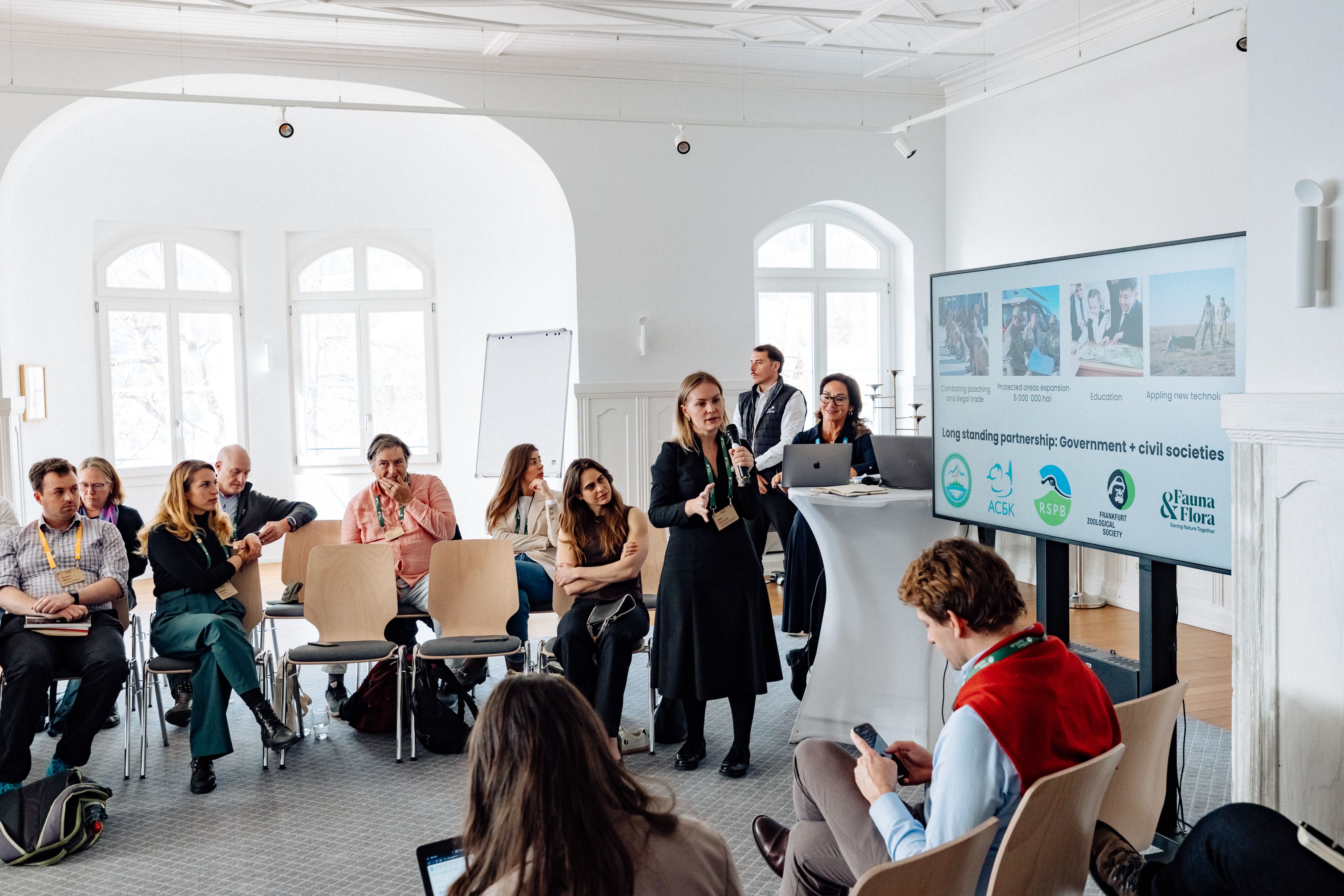
The first speaker told “a story about places of hope.” Because of illegal trade, a local animal species had been labeled as critically endangered, posing a threat not only to its survival but also to the health of the landscape and the nation’s sense of pride. This speaker worked in a partnership with government and civil society to support efforts to protect animals. In less than a decade, the species went from critically endangered to not threatened. Nonetheless, work must continue to maintain and expand this process.
Another speaker discussed using forest gardens for rubber production as a way to create biomaterials that can replace plastic. The diverse benefits range from carbon drawdown and a temperature of seven degrees cooler than a monoculture to increased rubber productivity, economic and ecosystem resilience, and food sovereignty. An additional point was the importance of finding the right ambassadors and local champions from an investment perspective, to show investors and supporters that as ecosystems become more self-sustaining, so do the communities that depend on them.
One speaker raised the point that we need to show that “conservation can pay,” emphasizing the previous speaker’s example of products, such as shoes and bags, made from biomaterials instead of plastic. As an example of combined creativity and entrepreneurship, the speaker showed the group an image generated by artificial intelligence of books and toys of ugly animals, aiming to spark interest in biodiversity among the next generation, beyond just the charismatic species. Adopting the tone of a call to action, the speaker emphasized the need for support from communities and law enforcement, and financing.
The last speaker stressed the importance of involving local people as part of the solution. In the Brazilian Amazon, many Indigenous populations live in harmony with nature, while only 8% of the area is designated as strictly protected (no humans). Through an innovative initiative, the expert helped communities along the Juruá River to manage their own fishing resources, while promoting community-based conservation efforts and ecotourism.
Insights from the Audience
The audience divided into smaller groups to discuss how to expand these initiatives. A participant mentioned the interconnectedness of the social and environmental aspects of the solutions. It was noted that the initiative was not only about wildlife but also about integrating local villages into the solutions. This integration is achieved by providing job opportunities for the local people, along with training on how to monitor species in their ecosystems. Subsequently, the discussion led to a point on the importance of integrating human and nature stories together. The participants were encouraged to visit the initiative in person to understand the human communities and ecosystems, and to see the beauty of the landscapes as well as the animals the project deals with.