
Introduction: A World Awake, Yet Unable to Act
The great paradox of our era is not a lack of knowledge, but a collective weariness that saps our will to act.
We live in a world saturated with awareness, flooded with information, and endlessly connected. Yet, when faced with urgent, global threats, our collective action falters—slow, scattered, and fragile. Climate upheaval, vanishing biodiversity, geopolitical tremors, and runaway technology all call for unity on a scale never seen before. Instead, we witness societies splintering, paralyzed by division, and politics trapped in cycles of reaction instead of vision.
This is not a crisis of knowing, but a crisis of doing—an erosion of our shared ability to shape the future together.
In just twenty years, the very fabric of our attention has been rewoven. No longer solely human, our focus is now engineered, harvested, and sold at scale. Platforms, driven by the relentless pursuit of surveillance profits, design experiences to keep us endlessly engaged, trapping us in a loop of distraction. This business model does more than spread misinformation or stoke division—it quietly drains the mental, emotional, and social reserves we need for meaningful collective action. Distraction is not a harmless diversion; it is a slow siphoning of our capacity to act.
This dynamic was anticipated nearly a century ago by Aldous Huxley, who warned not of authoritarianism enforced by fear, but of societies rendered passive by comfort, stimulation, and distraction. His concern was not repression, but voluntary disengagement—a population too entertained, too saturated, and too fatigued to defend its own future.
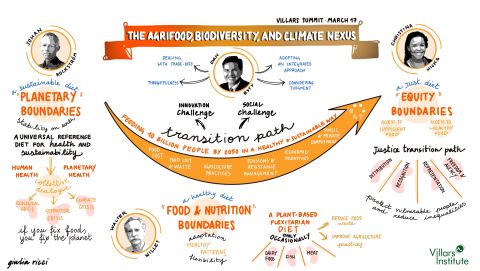
According to a landmark framework developed by researchers including Johan Rockström and his colleagues, the concept of planetary boundaries sets clear ecological limits that humanity must respect to maintain a safe operating space; these limits are defined by the Earth’s systems themselves and cannot be altered by political debates or narratives. The atmosphere does not respond to ideology. Ecosystems do not wait for electoral cycles. The central question is no longer whether humanity understands the risks, but whether it retains the collective agency required to respond in time. In light of the 2023 boundary assessment, it is clear that several critical limits have been breached, sharpening the moral and temporal stakes and emphasizing the urgency of swift, collective action.
Engineered Attention and the Erosion of Action Energy
The attention economy is often discussed in terms of misinformation or polarization. Less examined is its impact on human energy systems: cognitive, emotional, and social. In contrast to this cognitive drain, practices such as deep-work intervals can serve as a restorative alternative. By dedicating blocks of uninterrupted time to focused tasks, individuals can rebuild attention and model agency. Organizations can implement this through policies that encourage deep work, such as setting specific hours when communication tools are limited to urgent matters only, or establishing regular 'focus days' when team meetings are minimized. Furthermore, introducing team rituals, such as beginning meetings with a moment of mindfulness or implementing 'no-device' gatherings, can foster a culture of presence and engagement. This juxtaposition turns the critique of the attention economy into a possibility for enhancing collective agency. (Attention is all they need: cognitive science and the (techno)political economy of attention in humans and machines, 2025).
According to Hamza Belgroun, Franck Michel, and Fabien Gandon, people’s attention has become a scarce and highly valuable resource in the era of digital platforms, where it is increasingly influenced by market forces. Identity replaces dialogue. Digital reward systems privilege immediacy over depth, emotion over coherence, and conflict over cooperation. As seen in his writings, Huxley recognized how movements can fuel collective agitation that is directed against those in power. In his dystopian vision, social stability is maintained not through coercion, but through pleasure, distraction, and the systematic avoidance of discomfort. Citizens are not oppressed; they are entertained. Critical thought becomes unnecessary—and eventually unwelcome.
The parallel today is not literary; it is structural. Distraction consumes the psychological surplus required for long-term thinking, cooperation, and sacrifice. Climate mitigation, ecological restoration, and geopolitical stability demand sustained effort across decades. These are precisely the capacities being eroded. However, to fully grasp what remains possible, it is instructive to consider historical instances in which societies overcame similar challenges for the common good. The Montreal Protocol serves as a powerful testament to nations' ability to cooperate over the long term, achieving significant success in repairing the ozone layer through collective effort. This success story illustrates that agency and coordination can prevail, countering the forces of distraction and fragmentation. The outcome is a perilous mirage: societies appear energized and in motion, always reacting, yet lack the stamina to drive true transformation.
Planetary Boundaries as a Reality Check
The concept of planetary boundaries offers a sobering counterpoint to political volatility. Earth systems operate within biophysical thresholds. Climate stability, biodiversity integrity, freshwater cycles, and land systems are not abstract ideals; they are the conditions that make civilization possible. For instance, an increase beyond 1.5 °C in global temperatures is often cited as a critical limit to prevent the most severe impacts of climate change. Similarly, the loss of over 75% of a habitat can lead to irreversible biodiversity collapse. (Climate change extinctions, 2023) These numeric thresholds help visualize the boundaries essential to maintaining the balance required to sustain life on Earth.
Several of these boundaries have already been crossed. (Richardson et al., 2023) Climate change is no longer a future risk; it is a present force reshaping ecosystems, economies, and geopolitics. Biodiversity loss undermines food security, public health, and resilience. Water stress fuels conflict, migration, and systemic instability. (Climate Change and Health, n.d.)
These crises do not exist in isolation. They are tangled threads, woven through inequality, fragile governance, and the relentless pace of technological change.
Still, our responses remain fractured. Environmental dangers become political battlegrounds instead of shared priorities. Short-term gains eclipse long-term survival. Our ability to embrace complexity, make hard choices, and shoulder responsibility together seems to be slipping away.
Huxley’s caution rings louder than ever. Societies trained to shun discomfort find it nearly impossible to face hard limits. Yet, planetary boundaries require us to practice restraint, foster cooperation, and look far ahead—traits that cannot coexist with endless distraction and division.
Geopolitics in an Age of Fragmentation
The planetary crisis is unfolding amid mounting geopolitical turmoil. As the scramble for energy, minerals, water, and technological control heats up, the need for global cooperation has never been more critical.
Tackling climate change demands trust, coordination, and shared commitment. Yet, geopolitical rivalries transform these urgent needs into battlegrounds, and even the green transition risks repeating old patterns of exploitation under fresh banners.
This fragmentation is not incidental. Polarization—within and between societies—has become a structural feature of the current order. (Salloum et al., 2025) According to a recent article, distraction often drives multitasking and challenges individuals' self-regulation, which can affect cooperation and the focus needed to address shared risks and maintain sustained attention. (Distraction, multitasking, and self-regulation inside university classroom, 2024) Polarization is emotionally engaging but strategically draining. It channels collective energy into symbolic conflict rather than structural transformation.
The real peril is not just wasted effort, but losing our way entirely. Societies fixated on superficial battles often miss greater, systemic dangers—until those dangers erupt into irreversible crises.
Technology: Amplifier or Antidote?
Emerging technologies, artificial intelligence, sensing systems, and digital platforms are frequently framed as solutions to planetary crises. They can be. But they are also amplifiers of existing social dynamics. AI can strengthen early warning systems, optimize resource allocation, and support complex decision-making. It can also accelerate misinformation, surveillance, and manipulation if embedded within extractive attention economies. To ensure ethical AI governance, adopting the principle of 'data fiduciary duty' could be crucial. This principle requires that those managing or using data act in the best interests of the individuals whose data is involved, providing a concrete foundation for aligning technology with values and guiding its ethical implementation. For example, a municipal government in Amsterdam has implemented 'data fiduciary duty' principles to create an AI-driven platform that optimizes energy usage across the city, significantly reducing carbon emissions. Another instance is a partnership between a tech company and a conservation organization that uses AI to monitor and protect endangered species by gathering data through ethical AI frameworks, ensuring transparency and accountability.
The pivotal question is not if technology will mold our future, but whose values and which rules will mold technology itself.
Huxley’s wisdom endures: when tools offer only ease and never responsibility, passivity deepens. The real challenge is not what technology can do, but how we design it—crafting systems that revive our agency, nurture discernment, and spark collective action.
This calls for a transformation: technology must move from dazzling spectacle to sturdy backbone for caring for our planet.
Steffen et al. (2011) show that effectively addressing planetary crises requires a new global stewardship framework that includes collective efforts to overcome deep divisions, making depolarization a crucial but often underestimated systems requirement. This does not mean that disagreements or conflict will disappear, nor does it call for total neutrality. It means the capacity to hold complexity without collapsing it into identity battles. It means recognizing that climate stability, ecosystem integrity, and social cohesion are shared conditions, not ideological positions.
According to research by Frei, Everall, and Ringsmuth, creating enduring connections between polarized groups can help accelerate consensus and collective action when social and political conditions support it, suggesting that depolarization can make collective action more achievable rather than impossible. To achieve this, leaders can employ strategies such as facilitating dialogue and establishing shared goals. For instance, by organizing cross-community forums where individuals from different backgrounds work together on joint projects, leaders can foster mutual understanding and collaboration. Additionally, establishing a shared vision or objective that transcends individual group interests can help align efforts toward a collective aim. When trust erodes and long-term investments stall, such initiatives can break systems out of reactive loops and steer them towards constructive engagement.
Huxley cautioned that comfort breeds resistance to nuance. Yet, nuance is the very heart of systems leadership. Steering through planetary boundaries demands holistic thinking, collaboration across divides, and a sense of duty to future generations.
Depolarization is not just an ethical ideal; it is a survival skill for our times.
Intergenerational Responsibility and the Question of Time
Perhaps the deepest dimension of the planetary crisis is its intergenerational nature. Decisions made today will shape ecological and social conditions for centuries. Imagine a child born in 2025—how will the choices we make now affect their world? This tangible image of a future descendant can evoke a sense of responsibility and urgency, awakening protective instincts to act wisely and sustainably. To embed this sense of responsibility into actionable policies, leaders can institutionalize intergenerational thinking. Establishing youth advisory boards enables young voices to influence decision-making. Legacy impact assessments can help evaluate the long-term consequences of policies, ensuring they benefit future generations. These practices not only inspire practical action but also foster a culture of sustainable stewardship. This is where systems leadership proves vital. Today, authentic leadership is not about commanding attention, but about weaving long-term coherence through a world coming apart at the seams.
Huxley’s dystopia was ultimately a warning about time: a civilization willing to sacrifice the future for comfort in the present. The planetary crisis reveals the cost of that bargain.
Conclusion: Choosing Agency Instead of Numbness
This deep dive is not a call for alarmism, nor for blind mobilization. It is a call for lucidity.
Humanity has crossed a threshold where awareness is no longer the limiting factor. The constraint is collective agency—the ability to focus, cooperate, and act across difference and time.
Distraction and polarization are not harmless side effects of modernity; they are powerful forces that define our collective limits. If ignored, they may bring Huxley’s warning to life: a society that surrenders its freedom and responsibility, not by oppression, but by exhaustion.
Planetary boundaries will not wait for coherence to emerge spontaneously. The work ahead is deliberate: restoring attention, rebuilding trust, designing technologies for agency, and cultivating leadership capable of holding complexity. To achieve these goals, adopting the principle of 'radical transparency' as a guiding design principle can serve as a cornerstone for technologies that aim to restore agency. By clearly articulating this principle, aspirations can transform into actionable blueprints, fostering an environment where transparency bolsters trust and collaboration. Organizations can operationalize radical transparency by adopting open data practices that share data openly with stakeholders to facilitate informed decision-making and accountability. Additionally, embedding participatory governance structures can enable inclusive processes, allowing diverse voices to shape policies and strategies effectively. By implementing these measures, leaders can translate vision into practice, aligning organizational efforts with the broader goals of planetary stewardship and collective action.
The crossroads before us could not be clearer. We either learn to unite and act in the face of our shared planetary crisis, or we drift apart, distracted, until nature delivers its own verdict. But imagine a different tomorrow: by 2050, cities pulse with clean energy, microgrids empower every community, and wild landscapes thrive beside urban life. Picture nations choosing collaboration over rivalry, pooling knowledge and resources for the common good. In this world, innovation serves our values, and technology uplifts humanity while honoring the planet’s limits. This vision is not a fantasy, but a vision rooted in the choices we make today—a vision that calls us to step back from the edge and build a future of shared prosperity and harmony with the Earth.