


Launching and scaling an impact-driven venture is demanding: green entrepreneurs, “Ecopreneurs”, must prove commercial viability while embedding ecological and social value at the core of their models. Because they tackle real, physical problems, materials, energy, and logistics, rather than pure software, they face longer sales cycles, policy dependencies, and capital-intensive pilots, which create specific hurdles to attracting capital.
Being an investment-ready company is not simply a good idea or a pretty deck; it’s a repeatable operating system that communicates the plan to the right partners and is backed by evidence, governance, and strategy. Based on our experience with early-stage founders, we observe five recurring pitfalls that prevent otherwise promising ecopreneurs from securing the capital they need to grow.
The relevance in the market
Funding for SMEs has tightened while reporting expectations have risen, making readiness and standardized impact metrics more critical than ever (OECD, 2024). Clean-energy and circular solutions typically require hardware, infrastructure, and contracted offtakes, so capital needs are large and multi-year (IEA, 2024; WEF, 2024). Meanwhile, buyers often say they want “green” but hesitate to pay or switch without hard ROI proof, the classic say–do gap (Harvard Business Review, 2019). Circular models also live or die on take-back density, refurbishment yields, and quality assurance, that is, real reverse logistics execution (Ellen MacArthur Foundation, Sinctronics case). And in Europe, sustainability rules continue to evolve, so founders must show a clear compliance path and buffers (Reuters, 2025).
Pitfall 1: No clear plan or process
Many founders begin fundraising reactively—approaching investors only once the runway is short and without a clear roadmap for when or how to raise—so the story feels fragmented and fails to connect across investor types. The symptoms are familiar: activity without sequencing, random intros, ad-hoc docs, and missed follow-ups. Capital raising is not an event but a journey of relationship-building, preparation, and storytelling; the fix is to run a 10-Week Fundraising Operating System: craft a sharp narrative, build a top-30 target list, stand up an impact-ready data room, rehearse a “mock IC investment committee meeting,” and manage a weekly close cadence.
Pitfall 2: Leadership ambiguity
Investors expect clarity on who is leading the raise; too often, founders are absorbed by day-to-day operations, underestimate the time and focus required, and—when nobody “owns” the process—momentum is lost. Designate ownership with a Fundraising RACI and explicit time blocks: the CEO owns the story, top-30 outreach, and late-stage calls; the COO/CFO runs the model, VDR hygiene, and diligence Q&A; and the chair/advisor manages references and strategic introductions. Block 8–12 founder hours per week exclusively for fundraising to ensure continuity and credibility in every interaction.
Pitfall 3: Missing (impact-ready) data room
A strong data room is the backbone of investment readiness, yet many green startups approach investors with little more than a client pitch deck; what’s missing is a dynamic toolkit—a stress-tested financial model, diligence FAQs, governance documents, and a clear investor presentation—so trust erodes as investors are left with more questions than answers. The symptom is easy to spot: scattered files, no baseline metrics, and no theory of change. The fix is to build an impact-ready virtual data room (VDR) that includes a one-page Theory of Change; an IRIS+ Core Metrics Set with baselines and targets; an Impact Frontiers Five Dimensions of Impact table (What, Who, How Much, Contribution, Risk); an LCA/LCSA summary or third-party validation where available; and customer proof (LOIs, pilots, cohorts) alongside a risks-and-mitigations register and a standard DD FAQ.
Pitfall 4: Unclear valuation
One of the toughest early-stage conversations is “What is your company worth?” Founders who can’t articulate a defensible valuation risk are sending the wrong signals; it doesn’t have to be perfect, but it must be consistent, grounded in explicit assumptions, and transparent about growth pathways—especially in impact ventures where social and ecological outcomes must be balanced with financial metrics. When numbers are hand-wavy and untethered to traction mechanics, investors disengage; the fix is to triangulate using climate/circular-appropriate anchors: capacity-based comparables (installed MW, tonnes processed, units refurbished), contracted value (offtakes, framework agreements), verified unit economics with a credible path to margin at scale, and staged milestone notes supported by an assumptions ledger with sensitivities.
Pitfall 5: The confidence gap
Perhaps the most human challenge is that many founders simply don’t feel ready—worrying they lack the skillset, vocabulary, or roadmap to navigate investor conversations—so a confidence gap becomes as limiting as capital. The good news is these skills are learnable: with the right guidance, founders can build competence and confidence. When the mission is strong but the ask is hesitant, run a Mock Investment Committee every two weeks and grade red/amber/green across market, tech, ops, impact, and finance—because with rehearsal clarity compounds.
To keep in mind
Ecopreneurs face four extra, high-friction pitfalls: (1) policy and regulatory uncertainty, where new standards, permits, EPR and disclosures can stall pilots—mitigate by mapping critical approvals with buffers, naming advisors and precedents, and showing alignment with CSRD/ESRS, ESPR and relevant waste rules; (2) capital intensity and the “valley of death,” as hardware and circular assets need larger, longer-term funding, bridge with blended instruments tied to milestones, anchor offtakes/industrial partners, and a capex roadmap grounded in sector investment realities; (3) the green premium and demand friction, since buyers delay without a clear business case—counter with a productized ROI calculator, procurement-friendly pilots, and strong social proof; and (4) reverse-logistics and circular execution, where economics hinge on collection density, sorting yields and refurbishment QA, solve with route-density math, quality gates, and ecosystem partnerships (e.g., OEMs/retail/3PLs). Sources: Reuters; IEA; Climate Policy Initiative; Harvard Business Review; Ellen MacArthur Foundation.
Why this matters — and what’s next
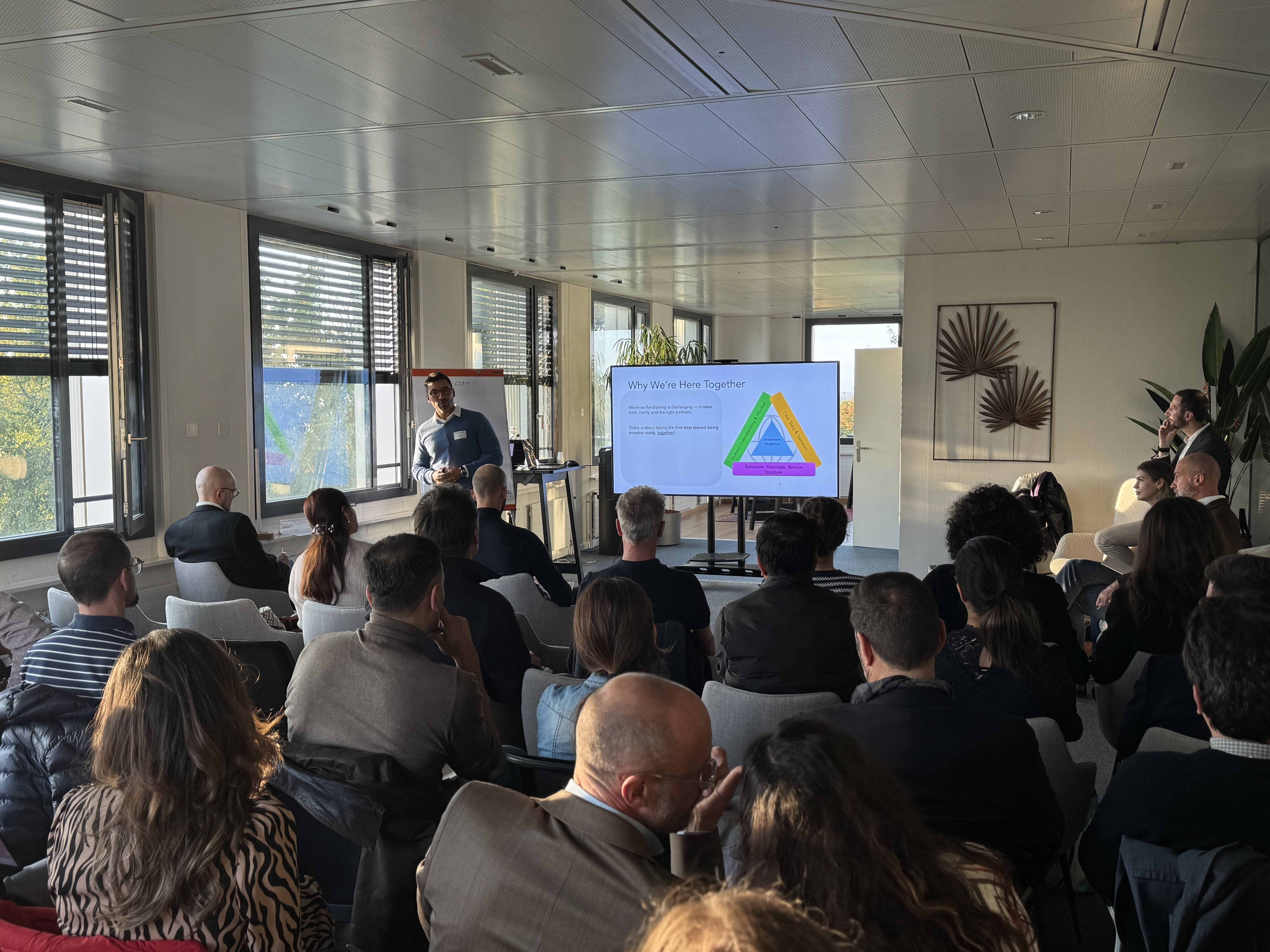
For ecopreneurs, overcoming these pitfalls isn’t just about “getting the round done.” It’s about proving that impact and growth can reinforce each other, and showing you’re ready to scale solutions to systemic challenges. Investment readiness is the bridge between vision and execution: it gives good ideas the structure, credibility, and momentum to attract truly aligned capital. That’s why, together with the Villars Institute, Helvora is launching the Investment Readiness Masterclass, a practical, hands-on program that helps founders build the capabilities and confidence to raise successfully. In seven sessions over seven weeks, participants leave with: (1) an investor-ready narrative pack, (2) a stress-tested model tied to impact, funding, and risk, and (3) an impact metrics pack aligned to IRIS+ and the Five Dimensions of Impact, plus a clean VDR and a concrete close plan. If you’re ready to turn intention into investment and momentum into measurable impact, this is your next step.
Click here to find out more about the Investment Readiness for Systemic Impact Program (IRSI).
References
- OECD — Financing SMEs and Entrepreneurs 2024: An OECD Scoreboard (policy highlights + report).
- IEA — World Energy Investment 2024 (overview, key findings, and full report).
- World Economic Forum (2024). “Why climate tech desperately needs more financial backing.”
- Harvard Business Review — “The Elusive Green Consumer.”
- Ellen MacArthur Foundation — HP × Sinctronics reverse-logistics case.
- Impact Frontiers — “Five Dimensions of Impact” (IMP-aligned).
- GIIN — IRIS+ Core Metrics Sets and “IRIS+ and the Five Dimensions of Impact.”
- Reuters — EU “Simplification Omnibus” proposal on sustainability reporting scope (CSRD).
- Climate Policy Initiative — Global Landscape of Climate Finance 2024 (context on capital gaps).