
Ideas from the Speakers
The presenter explored the role of artists in the climate crisis, suggesting that, like many people, artists are burdened and troubled by the ever-increasing need to address climate change. Especially in the context of recent political developments and despite being more urgent than ever, climate change faces unprecedented levels of denial, misinformation, and sheer ignorance of the topic.
A core theme of the discussion was the communication crisis surrounding climate change and the planet’s environmental breakdown. There has never been more research and data that prove not only the dangers we are facing but also some of the effective strategies that may allow us to confront the problem. Nevertheless, it appears that the facts and research published by scientists and experts in the field are not effectively reaching the public.
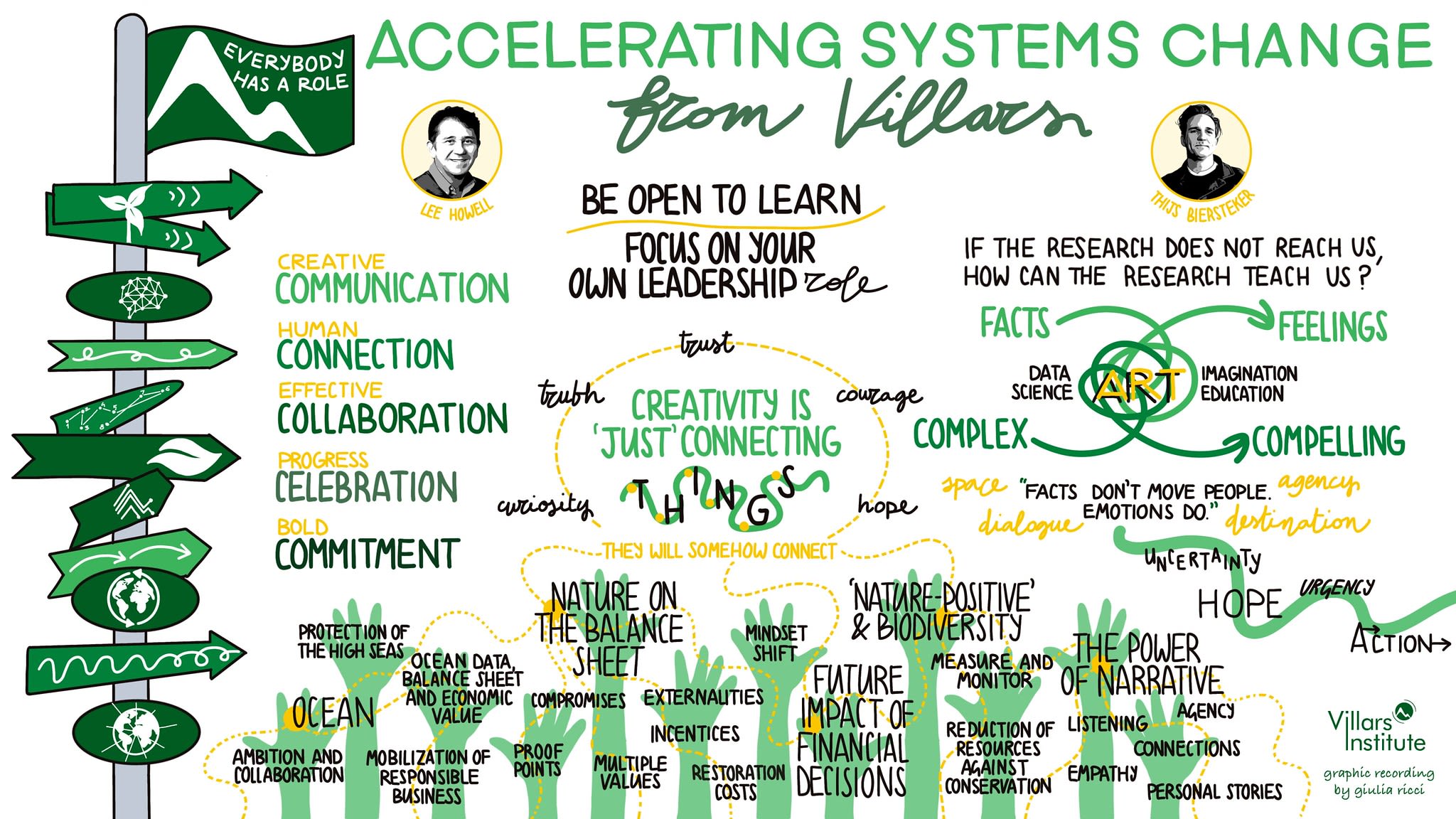
Trying to explain this phenomenon may be more complicated than it seems. Humans are emotionally driven and tend not to engage with content that is highly unrelatable, overly complex, or presented in an uninspiring way. Empowering science with creativity and imagination could help to overcome this. We need to communicate science in a way that evokes emotion.
Another challenge within the communication flow of science is the constant overload of knowledge and newly produced insights from the scientific community that are communicated to the public. Although scientific innovation and research in the climate field are being produced at an unprecedented pace, the sheer volume makes it nearly impossible for the average person to process all the information. People often feel overwhelmed and as a result tune out the most important messages or, worse, stop caring about the issue altogether.
However, solving the communication crisis goes beyond just appealing to and conveying emotions; it is also about showing where the scientific process leads us and what it looks like. We must acknowledge the uncertainty of science. In fact, we must appreciate and value it since, after all, uncertainty is the soil from which hope grows.
Hope was another major theme. As much as science can ignite action, it is hope that sustains it. Hope can take many forms, including through the arts, but one of the most powerful and effective ways to create and communicate hope is by sharing real-world projects and progress that have directly affected the planet and, most importantly, people. Humans cannot easily relate to data, but we can relate to people and can understand the impact of systemic change through their experiences.
Some key takeaways from both the presentation and the summit overall were highlighted. In the context of this summit, creativity can mean making connections—connecting the highly scientific and theoretical insights from discussions in Villars to real-world situations and, most importantly, to the people directly affected by these issues. In addition, narratives have agency. We must present the narratives of science in a different way to turn emotionless data points into something that inspires and drives change.