


The Tonga expedition in context
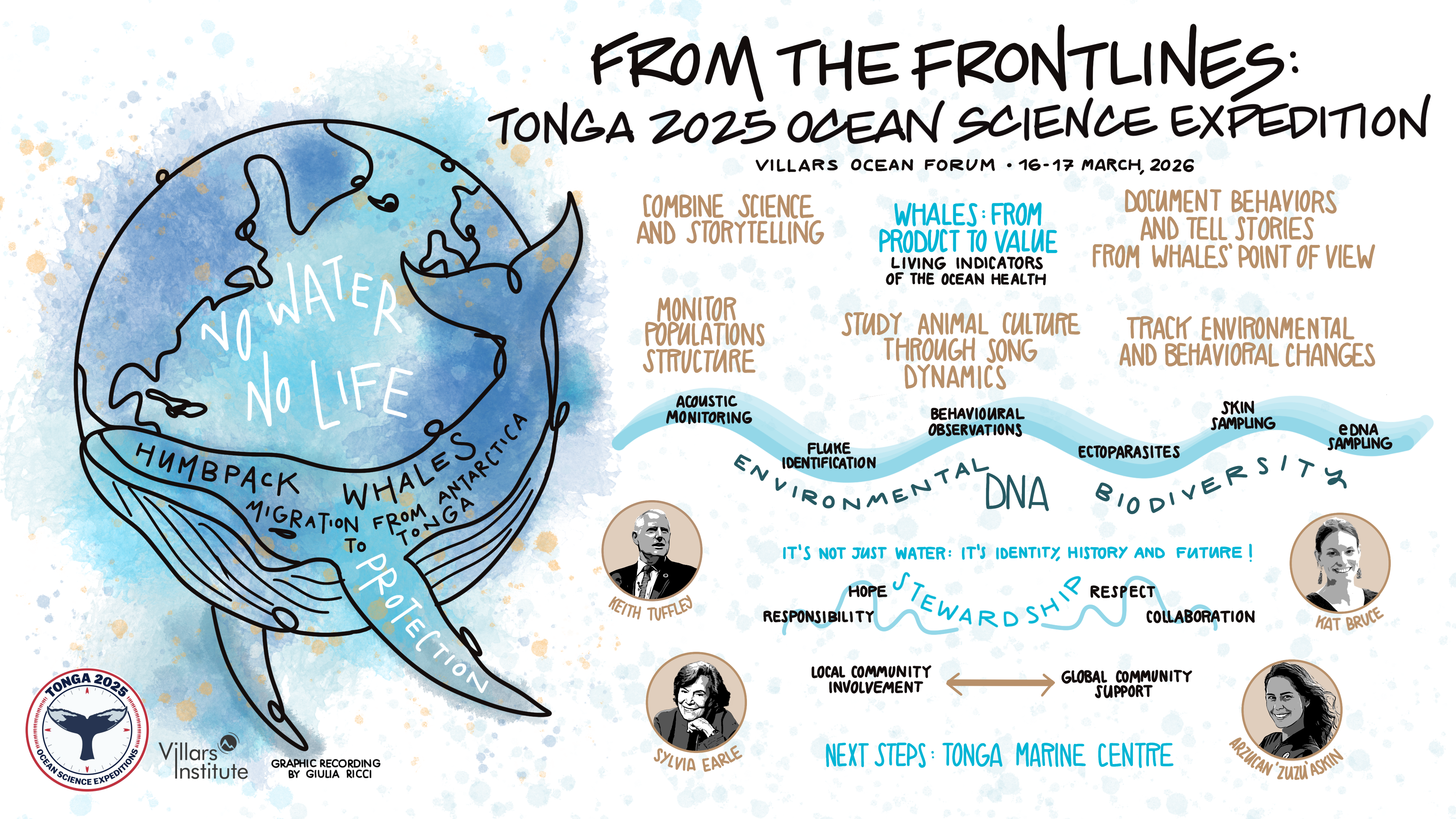
In August 2025, an international team of scientists, filmmakers, and conservationists travelled to Tonga with a shared mission: to observe, document, and better understand the lives of whales and the broader marine ecosystems they inhabit. The expedition combined scientific research, acoustic monitoring, genetic sampling, and community collaboration to deepen our knowledge of ocean life while promoting conservation. At its heart was a focus on the remarkable seasonal gathering of Humpback whale populations that migrate to the region to give birth and raise their calves.
Tonga provides a unique setting for such research. As one participant described it, the country is “99% ocean and 1% island,” a reminder of how deeply marine life defines the nation. The surrounding waters have been a whale sanctuary since 1978, a significant shift from earlier centuries when whales were primarily viewed as resources for human consumption. Historically, whales were hunted for commercial products such as oil and meat. Today, however, growing scientific knowledge and cultural awareness have helped transform public perception. Whales are increasingly recognized as intelligent, social animals with complex behaviours and even cultural traditions. This change in perspective has been driven in part by advances in research and documentary filmmaking. Scientists have learned that whale populations possess distinct vocal patterns, often described as songs, that vary by region. Individual whales may even have unique acoustic signatures. Such discoveries highlight the sophistication of whale communication and underscore how little humans once understood about these animals while exploiting them.
The activities in and out of the water
The Tonga expedition sought to build on this growing body of knowledge using methods designed to minimize disturbance to the animals. One of the primary tools used by the research team was acoustic monitoring. Hydrophones (underwater microphones) were deployed to capture the sounds of whales beneath the surface. Although the amount of audio collected was limited, the recordings revealed beautiful intricate patterns of whale songs and calls. These sounds helped researchers identify mothers and calves, map whale movements, and better understand how different whale populations interact across the ocean. The recordings also captured another, less welcome soundscape: human noise. Construction, fishing activity, and boat traffic generated significant underwater noise pollution. This highlights the growing impact of human activity even in remote ocean environments.
Visual observation was another key component of the expedition. Researchers identified individual whales by studying their flukes: the distinctive patterns and shapes on the underside of their tails. Each whale’s fluke acts like a fingerprint, allowing scientists to track individuals over time. During the expedition, the team successfully identified more than thirty unique whales. They also documented ten mother–calf pairs, an encouraging sign that the region continues to serve as an important breeding ground. Working around calves required particular care. Young whales move constantly and stay close to their mothers, making identification difficult. Some mothers were cautious about human presence, and the researchers prioritized respectful, non-invasive observation. The team developed innovative techniques to collect calves skin samples indirectly from the mother’s skin, since both mother and calves remain in constant contact with eachother. Some photos revealed important biological information. Some whales bore bite marks from deep-sea sharks, providing clues about how deep they dive during migration. Scientists also observed ectoparasites such as barnacles and whale lice on fins and skin. These organisms offer valuable insights into whale health and migration patterns, as their presence can indicate where the animals have travelled.
In addition to studying the whales themselves, the expedition examined the broader marine ecosystem through environmental DNA (eDNA) sampling. By filtering seawater, scientists can capture genetic traces shed by organisms in the environment: ranging from phytoplankton to large vertebrates. This method allows researchers to identify species present in the area without directly observing them. The team detected approximately 860 different species, including 512 types of plankton and 348 vertebrates. Biodiversity was particularly high in shallow waters, though specialized species were found in both shallow and deeper areas. Among the species identified were around a dozen types of sharks, many of which are classified as vulnerable or critically endangered. The findings reinforced concerns about the health of global ocean ecosystems, especially given estimates that roughly 90 percent of shark populations have disappeared due to overfishing and habitat degradation.
"Oceans connect us all"
Despite these challenges, the expedition emphasized hope and collaboration. All data collected during the research will be shared with the wider scientific community to support further study and conservation efforts. Because relatively little scientific data has historically been gathered in Tonga, the expedition represents an important step toward building a stronger knowledge base for the region. Equally important was the involvement of local communities and experts. Protecting the ocean requires cooperation between scientists, policymakers, and the people who live closest to these ecosystems. The team hopes their work will contribute to the creation of a Tonga Marine Center dedicated to research, conservation, and education. Ultimately, the expedition reinforced a powerful message: the ocean connects us all. From whale migrations that span entire hemispheres to microscopic DNA drifting through seawater, marine life forms a vast and interconnected network. Protecting it will require continued research, global cooperation, and a shared commitment to safeguarding the oceans for future generations.