
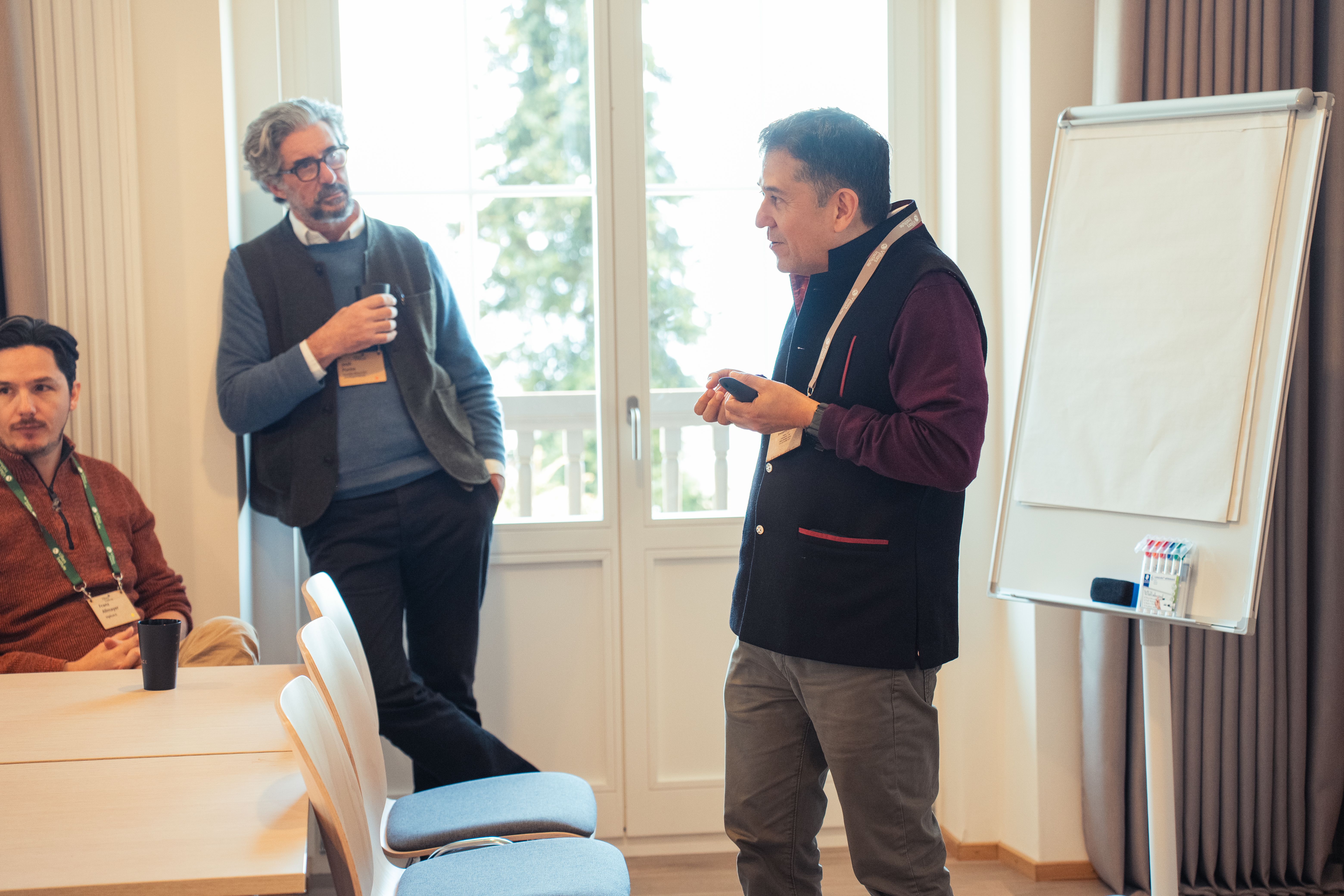


Ideas from the speakers
The audience was first introduced to the general concept of redesigning finance to serve life. Gold, Bitcoin and Tokenised Natural Habitats (TNH) were compared, with TNHs described as having higher intrinsic utility, increasing measurability, strong policy demand and potentially critical systemic importance. They were also presented as the only asset class meeting cash flow criteria. The segment concluded with the insight that nature finance (investing in biodiversity and ecosystems) is becoming a core component of climate finance (investing in carbon reduction). The “playbook” used to scale and digitise cryptocurrency was suggested as a way to address the funding and trust challenges currently hindering nature-based solutions.
The session then moved to a presentation on Gabon and the work undertaken locally to preserve its forests, alongside reflections arising from engagement with local communities. Roughly 87% of Gabon’s landmass is covered in tropical rainforest, and around half of its population (1.3 million people) lives in the capital, Libreville. This was presented as an example of a broader paradox: that some of the most ecologically rich regions are also economically constrained. While Gabon hosts and preserves a highly complex ecosystem, much of its population faces economic challenges. The project presented has grown over 17 years and is hosted by the African Conservation Development Group (ACDC). The segment concluded with the question: “How do we credibly go from invisible to investable?”
The final speaker presented a “natural living ledger” in the form of a technological innovation: continuous and instantaneous landscape Monitoring, Reporting and Verification (MRV). The discussion highlighted that several small yet vital connections still need to be built between natural capital (the living foundation), social capital (trust infrastructure) and economic capital (enterprise and institutional infrastructure) within nature tokenisation. The product presented is an instrument that companies can use to verify, secure and certify their investments in natural habitats.
Insights from the audience
The first question addressed how scientists calculate ecological value, what units are used (water, biomass, CO₂ capture potential, etc.), and whether these metrics are independent or could be consolidated into a single framework. The response clarified that this remains an active debate within scientific and ecopreneurial communities and has not yet been resolved, although such metrics remain important.
A second strand of discussion explored how tokenising nature could function in practice by assigning different stakeholders (communities, landowners and conservationists) a formal share of a project upfront, tracked and rewarded on-chain. A concept referred to as “owners of the wallet” is being explored to encode these ownership rights. The same infrastructure could also support targeted taxation mechanisms, for example on harmful goods or agricultural practices, with revenues automatically redirected into health or reforestation initiatives, thereby linking sources of harm to remediation efforts. Further discussion focused on investment models. Rather than investing in a single nature-based token, one proposal is to bundle different tokens (e.g. tree-based, solar and others) into diversified portfolios, similar to exchange-traded funds (ETFs). This could spread risk for investors while making such products more accessible and appealing to a broader audience. It may also enable engagement with wider digital communities, potentially increasing participation and liquidity.
The discussion then turned to economically constrained yet ecologically rich countries, and how governments are responding to such initiatives. One perspective suggested that if environmental markets are sufficiently robust, they may operate independently of direct political endorsement, although this was framed as a theoretical proposition. Finally, the perceived simplicity of tokenisation was questioned. Responses highlighted significant trust challenges within environmental markets, as illustrated by past issues in carbon markets. One proposed approach is the establishment of oversight or leadership structures to maintain clarity and credibility in token design and implementation. The session concluded with a call for broader support, emphasising the need for increased capital and capacity to advance these initiatives.