



Ideas from the speakers
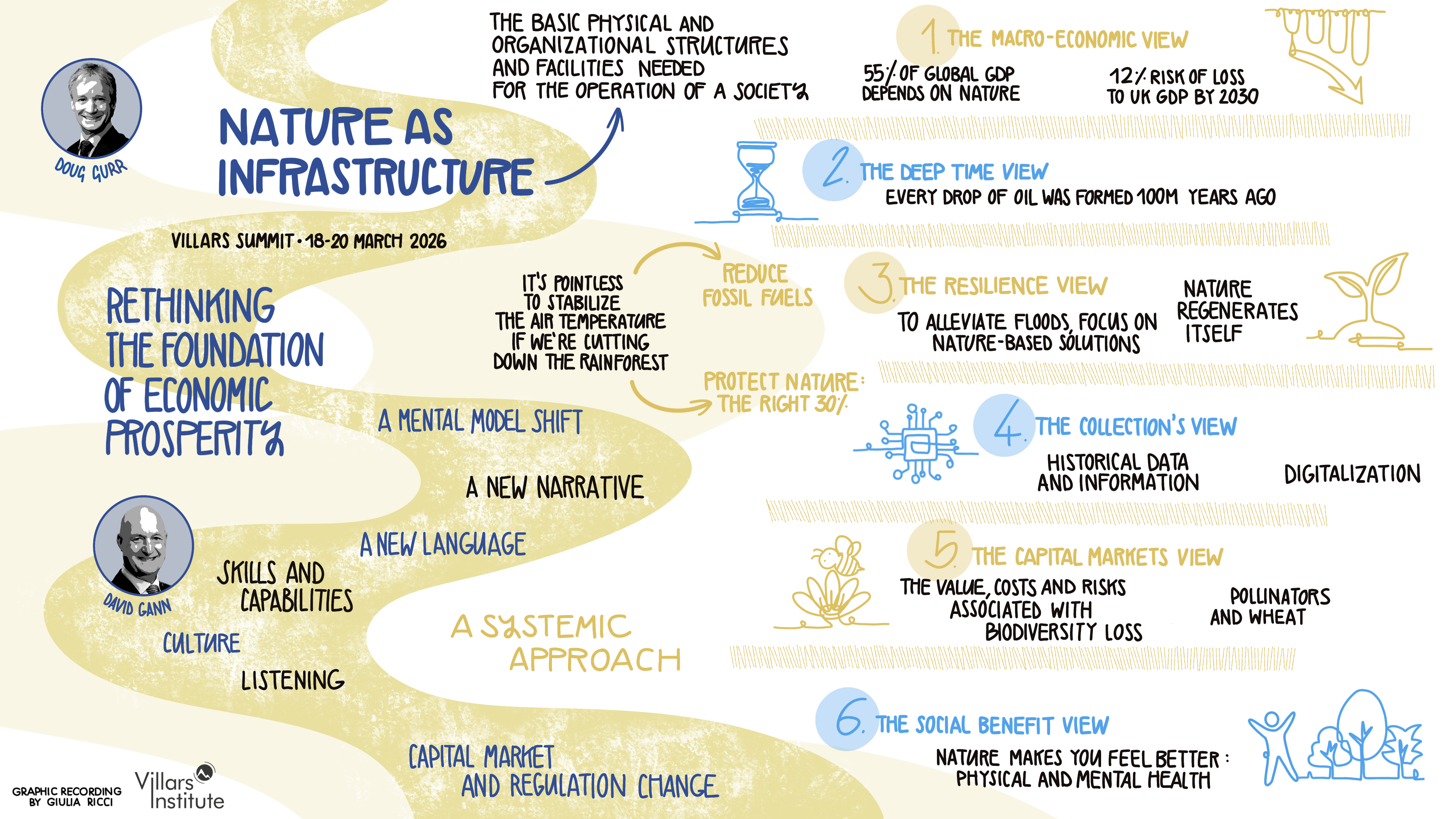
The plenary session focused on the idea of “nature as infrastructure”, noting that 55% of global GDP is moderately to highly dependent on nature. This concept was presented as a way to shift the narrative and drive systemic change through regulation and capital markets, ultimately helping to rethink the foundations of economic prosperity. The discussion contextualised “nature as infrastructure” through several different perspectives to highlight its relevance.
From a resilience perspective, nature-based solutions are often not considered infrastructure. As floods and other disasters become more frequent, public attention tends to focus on insurance and protection through more conventional forms of infrastructure. However, participants argued that nature-based solutions should also be recognised as infrastructure, particularly when they fulfil the same functions as many engineered protection strategies. For example, mangroves can provide flood mitigation in much the same way as seawalls, while also regenerating naturally and requiring far less maintenance. This was presented as one of many examples where nature can serve as infrastructure and, in some cases, already does. From the perspective of collections and data, museum collections can reveal biodiversity loss while also demonstrating areas where conservation efforts have been successful. Physical collections can be digitised and developed into infrastructure products that support both research and public understanding. Access to such data was presented as a form of information infrastructure and an example of nature functioning as infrastructure.
From a capital markets perspective, assigning a monetary value to nature can help communicate its importance in terms familiar to investors and financial institutions. Focusing on risk illustrates why nature and biodiversity should be viewed as infrastructure. For example, wheat accounts for approximately 20% of global food consumption, yet only 19 varieties are commercially cultivated. This creates significant risk, including the possibility of widespread crop failure, with cascading impacts such as inflation and instability in financial markets. The discussion highlighted how the genetic diversity of crops, alongside ecosystem services such as pollination provided by bees, functions as critical infrastructure for resilience. From a social benefits perspective, nature contributes significantly to physical and mental wellbeing. As more than half of the global population now lives in urban environments, access to nature in cities is becoming increasingly important. Participants highlighted the National Education Nature Park programme in England, which has engaged more than 7,500 schools in nature-based activities. Data collected through the programme suggests improvements in school attendance, illustrating the educational, scientific, physical and mental health benefits that nature can provide.
The discussion concluded by recognising the importance of stabilising carbon dioxide levels in efforts to address climate change and conserve nature. However, participants argued that these goals ultimately depend on protecting nature itself, reinforcing the central idea that nature should be recognised as essential infrastructure.
Insights from the audience
During the discussion, participants raised questions and reflections on how the concept of nature as infrastructure could be translated into practice. One concern focused on the inclusion of people who are directly affected by actions taken to drive systemic change. It was suggested that local communities must be actively listened to and involved in decision-making processes. Their close relationship with local ecosystems was seen as a valuable source of knowledge, and participants argued that achieving a broader shift in mental models requires recognising the cultural dimensions of environmental stewardship.
Another discussion focused on the types of regulation needed to encourage collaboration between governments and markets while fostering innovation. The “30 by 30” framework, which aims to protect 30% of the Earth's land and ocean area by 2030, was discussed as one example of how policy can help incentivise action. Participants suggested that highlighting the costs of inaction could encourage businesses to recognise nature as critical infrastructure worthy of protection.
More broadly, there was agreement that effective regulation can support innovation by providing clear parameters and reducing uncertainty. To successfully shift the narrative towards recognising nature as infrastructure, participants emphasised the importance of communicating in ways that resonate with decision-makers. This requires understanding the priorities, incentives and language of different audiences, ensuring that the value of nature can be understood not only in environmental terms but also in economic, social and strategic ones.