
Where the Ocean Meets the Human Experience
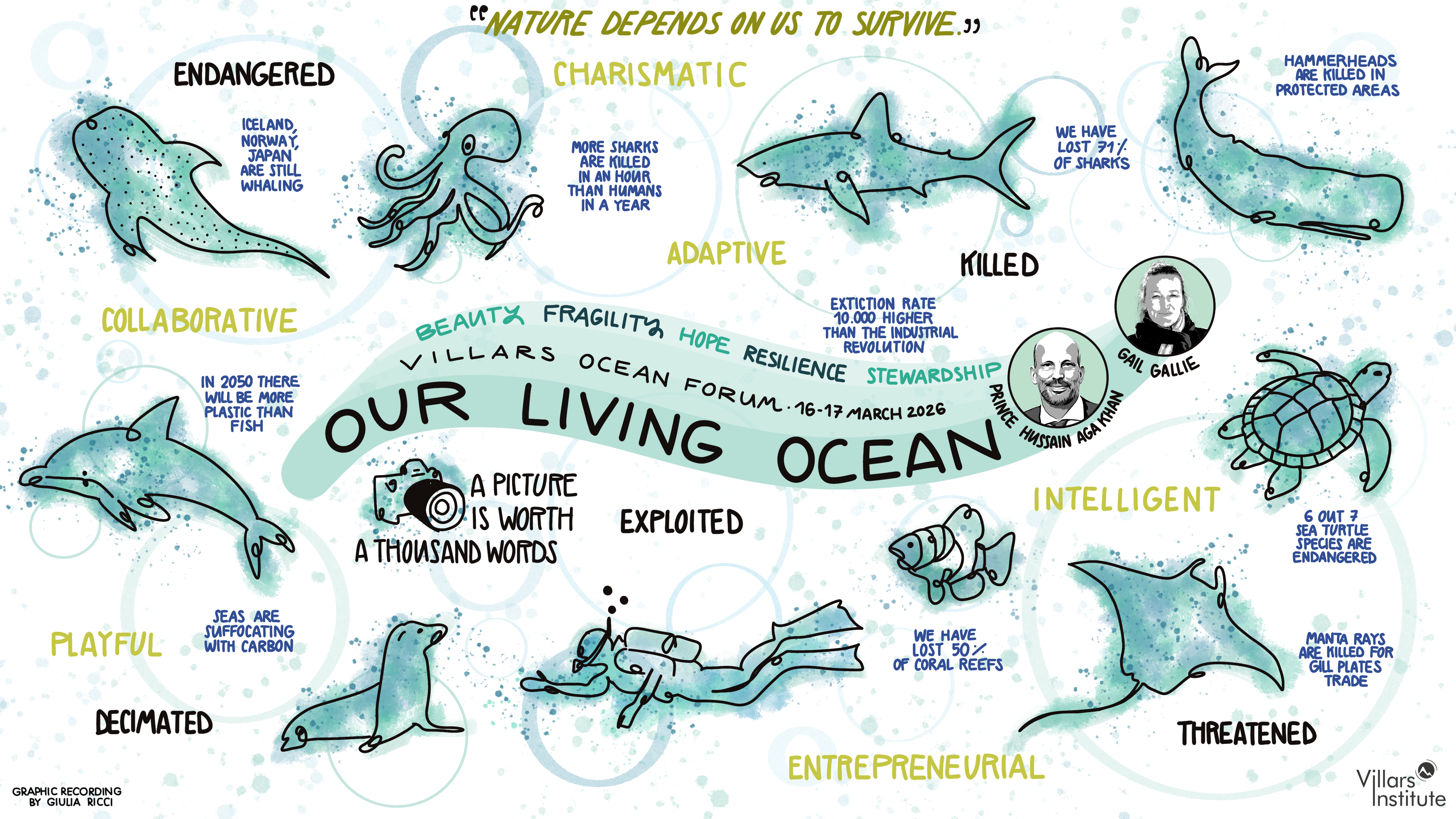
The session Our Living Ocean was shaped as a deeply personal and visual narrative led by Prince Hussain Aga Khan, whose work in photography and conservation reflects a long-standing relationship with the sea. Rather than approaching the ocean through abstract data or policy frameworks, he invited the audience into a lived experience, built through years of immersion, observation, and encounter. At the heart of his storytelling was the idea that the ocean is best understood not through explanation, but through connection. Visual imagery became a central medium for this, offering a way to translate complex ecological realities into something immediate and felt. Through this lens, the ocean emerged not as a distant or inaccessible environment, but as a dynamic and expressive world, full of presence, meaning and connection. His journey through the ocean revealed the extraordinary range of experiences it offers. Encounters with marine life were described not simply as observations, but as moments of mutual awareness where curiosity flows in both directions. These interactions challenge the conventional view of humans as separate from nature, instead suggesting a more reciprocal relationship grounded in attention and respect. The ocean, in this sense, becomes a space where one can rediscover humility, wonder, and a sense of belonging within a larger living system.
…through immersion, observation, and encounter
This experiential richness also carries an emotional weight. The beauty of the ocean, its fluidity, diversity, and quiet intensity create a powerful draw. Yet this same beauty underscores what is at risk. Through his work, Hussain conveyed how fragile these ecosystems are, and how quickly they are being altered by human activity. The degradation of marine environments is not presented as a distant possibility or an abstract concept, but as an ongoing transformation already visible to those who spend time within these spaces. What distinguishes his perspective is the balance between intimacy and responsibility. The more one engages with the ocean, the more one becomes aware not only of its beauty, but of its vulnerability. This awareness naturally leads to a sense of stewardship. Protection, in this context, is not framed as an abstract duty, but as a response that emerges from connection.
At the same time, the session pointed toward unyielding optimism. Efforts to protect marine ecosystems are gaining traction, and there is growing recognition of the ocean’s central role in sustaining planetary systems. However, the underlying message remained clear: meaningful change depends on how individuals and societies choose to relate to the natural world. Ultimately, Our Living Ocean presented the sea as both a source of profound experience and a call to action. Through storytelling rooted in lived encounters, Prince Hussain Aga Khan illustrated that the ocean is not only something to be studied or protected, but something to be encountered: an environment capable of shaping perspective, deepening awareness, and redefining humanity’s place within the natural world.