

Ideas From the Speakers
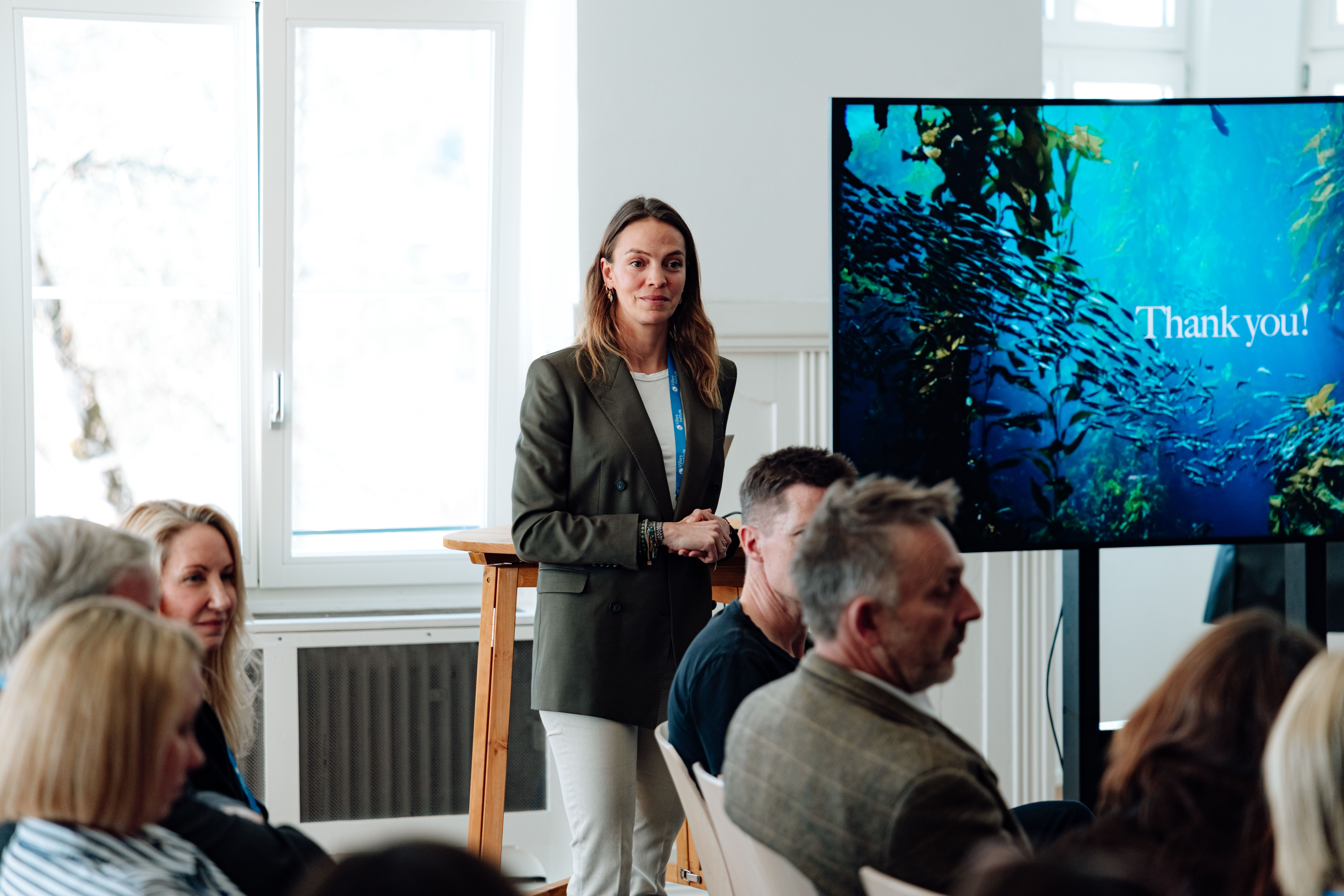
This session explored what “scaling” means when it comes to regenerative ocean solutions, and whether scaling is even the right word. One speaker discussed offshore infrastructure, like wind farms, cables, and coastal developments. These are expanding rapidly, but instead of viewing them as harmful, some speakers framed them as an opportunity. One possibility is to integrate restoration directly into infrastructure through nature-inclusive design, so that building in the ocean could also create habitats and support biodiversity. Another approach looked at ecosystem restoration, like coral reefs, some of which have lost their structure entirely and cannot recover on their own. Interventions could help rebuild those physical foundations. One option is to work with local communities instead of external teams. By training local people to build and monitor these systems, they can also maintain them. This also encourages long-term stewardship, an issue which came up repeatedly during the session. In both examples, questions around ownership, responsibility, and long-term management are still unresolved. After restoration, who’s responsible for it in 20 or 30 years? The conversation then shifted toward blue carbon ecosystems, like mangroves and seagrasses, which store large amounts of carbon while also supporting biodiversity and coastal protection. These were presented as a major opportunity, especially because they sit at the intersection of climate and nature, but investment in blue carbon is extremely low. There’s interest from investors, but the problem is that projects often struggle to reach a stage where they are considered investable. Investors face high costs and uncertainty when trying to evaluate these projects. This creates a gap where both sides are interested, but the system doesn’t allow them to meet in the middle. Overall, the session suggested that scaling is less about technology and more about everything around it–systems, incentives, and structures–that determine whether a solution can actually grow.
Insights From the Audience
A key question that kept coming up was who is paying for this, and why? Different possibilities were discussed, including governments, private investors, philanthropy, and carbon markets. Carbon markets, particularly for blue carbon ecosystems, were seen as one potential pathway, but the markets are small and difficult to navigate. There was also some skepticism around relying too much on carbon as the main metric, since it risks reducing complex ecosystems to a single value. The role of communities was a big part of the discussion. Projects that involve local people as stakeholders tend to be more resilient and more likely to scale. This includes creating jobs, building local capacity, and ensuring that benefits are shared. The emphasis here is not about doing more of something faster, but offering or embedding solutions in a way that makes them last. Another point that came up was collaboration, the sharing of knowledge and best practices. Some participants suggested that greater collaboration, even between organizations that might otherwise compete, could help accelerate progress overall. Finally, there was a shift in how scaling itself was understood. Some participants said that scaling could also involve people. Solutions that engage large numbers of people, even if they are slower or more labor-intensive, might actually lead to stronger and more sustainable outcomes in the long run.
Next Steps
What stood out most in this session is that the challenge of scaling regenerative ocean solutions is not just about the solutions themselves, but how the systems around them are not set up to support their growth. One of the clearest gaps is with early-stage support. Projects need time, funding, and guidance to develop, but current financial structures are not designed for that phase. This creates a situation where promising ideas struggle to survive long enough to become viable, so options like public funding, philanthropy, and private investment are important, especially in the early stages. There is also a need to rethink how value is defined. If ecosystems are only valued based on carbon, other important benefits–like biodiversity, coastal protection, and community resilience–can be overlooked. Some of the hesitation around financing comes from the fact that these ecosystems don’t “pay back” in direct or immediate ways, even though their long-term benefits are significant. Expanding how value is measured, or even questioning how it is expected to be measured at all, could help open up new ways of supporting these projects. Scaling is not just a technical or financial problem, but also a social one. Projects that are embedded in communities and create local ownership seem more likely to succeed over time. Progress will likely depend on better alignment between different parts of the system. This means connecting projects with funding, improving coordination between stakeholders, and making it easier to move from early-stage ideas to implementation. It may also require accepting that not everything will be perfect from the start, and that some level of experimentation is necessary.