


Ideas from the speakers
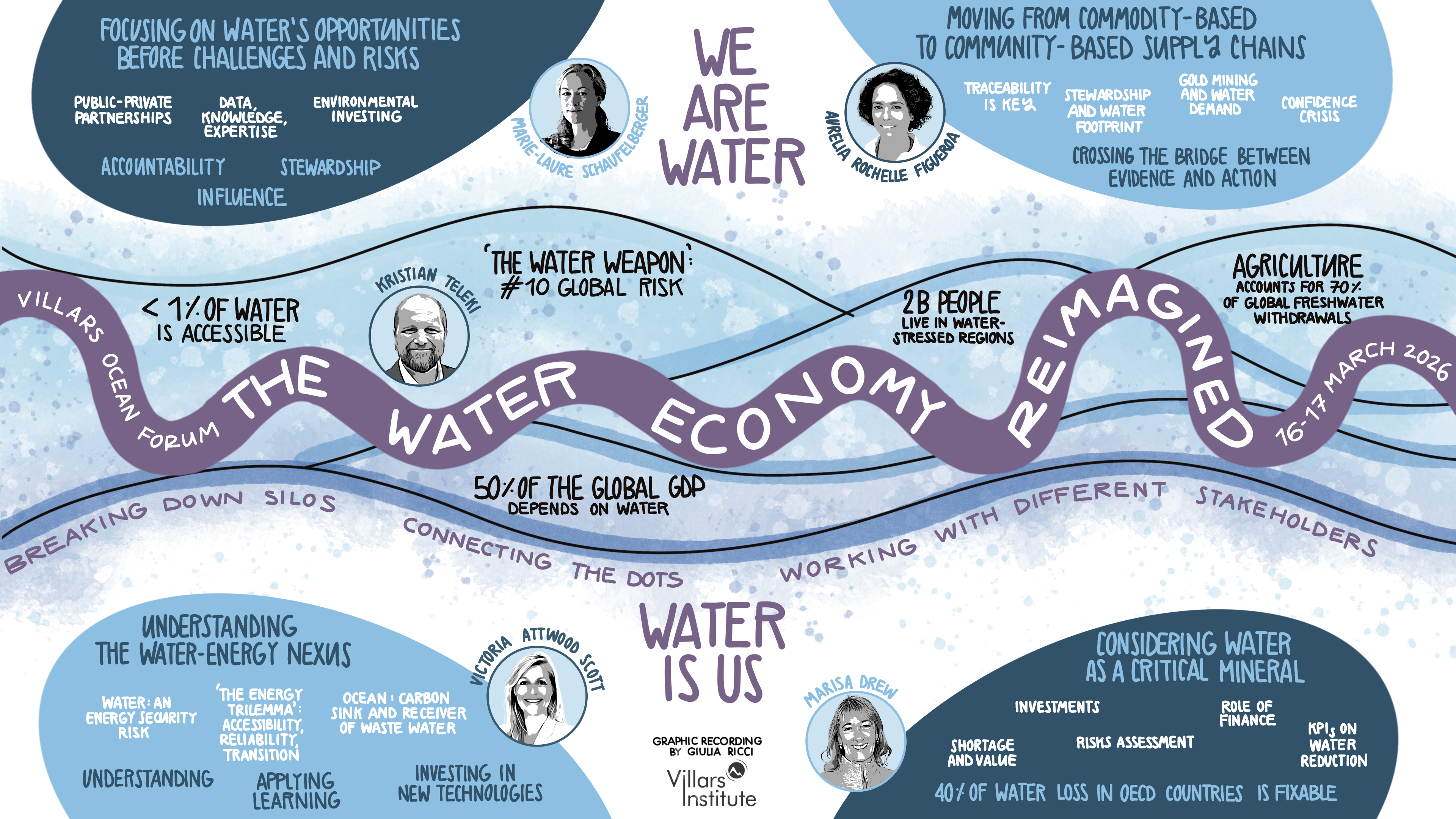
The session highlighted that water is no longer seen as an environmental concern, but is increasingly understood as an economic infrastructure. Participants stressed that water supports food systems, energy systems, industrial production, supply chains and social stability. One speaker noted that water barely dominates the public agenda. However, what has changed is that water is moving from the environmental agenda into the financial agenda. This shift reflects a growing recognition for water as a risk to business, capital markets, and geopolitical stability.
A major topic of the discussion was that finance is starting to engage with water in a more serious and structured way. One participant described how water is like other scarce resources, essential, mispriced and increasingly visible in financial risk. From a financial perspective, this means identifying where water creates risk in portfolios, where clients depend on it, and where financing can support solutions.
Another important insight was that water should not be only view through the lens of risk. A panellist noted that water had been identified decades ago as a long-term opportunity area, especially for solution providers, utilities, and environmental services. That opportunity-first approach helped build expertise, data, and conviction that remain valuable today, especially at a time when sustainability efforts often face political and commercial resistance. Yet the discussion also acknowledged that many markets are still behind: while climate has entered mainstream investment thinking, water and nature-related risks are only beginning to receive the same level of attention.
The session also emphasized the water-energy nexus. Panellists described how energy is needed to treat, pump, transport, and recycle water, while water is essential for electricity generation, cooling systems, mining, and parts of the energy transition. This interdependence means that water stress is also becoming an energy security issue influencing government energy policies and the “energy tri-level” (price, accessibility, clean energy). Shipping and commodity systems already show the effects, whether through drought-related constraints, damage to infrastructure, or changing operating conditions. The conversation therefore pushed beyond water as a standalone issue and presented it as deeply interwoven with broader resilience challenges.
Finally, the panellists highlighted supply-chain traceability and implementation. One example showed how tracing a mineral supply chain made visible the stark contrast between water-intensive industrial processing and nearby communities lacking reliable access to safe water. Proven solutions already exist, including technologies that can sharply reduce water use, but speakers returned to the question: why is action still so slow, even when the business case is strong? Across the session, the message was that the challenge is no longer only understanding water risk, but building the confidence, governance, and collaboration needed to act on what is already known.
Insights from the audience
The audience discussion reinforced the sense that action on water does not require starting from scratch. One contribution argued that existing frameworks already provide a foundation, especially global goals related to water and sanitation. Rather than building entirely new architectures, participants suggested that more progress may come from focusing effort, coordinating around what already exists, and accelerating implementation. This aligned with a broader message from the panel: the problem is not a lack of ideas, but the fragmentation of effort and the tendency to reinvent rather than connect.
Another strong theme from the audience was communication. Several reflections suggested that water may be more tangible to people than carbon because it is easier to picture, easier to relate to, and more directly tied to everyday life. Yet current ways of discussing water often remain too technical. Participants therefore called for forms of communication that make water impacts legible and meaningful to non-specialists, especially consumers. The idea of a simplified “water footprint” emerged as one possible analogy, similar to how nutrition labels or carbon indicators can help people make sense of complex information. This discussion broadened the session’s focus from corporate disclosure to public understanding and consumer agency.
In the closing remarks, there was a share feeling of hope, not from optimism detached from reality, but from evidence that the conversation itself is changing. Water is now being discussed across finance, investment, supply chains, and public policy. Participants pointed to emerging disclosure frameworks, growing consumer awareness, the momentum of pilot projects, and the engagement of younger generations as reasons to believe that change is possible.
As a speaker said: “We are nature, nature is us. Maybe we can say the same with water”.