

Ideas from the speakers
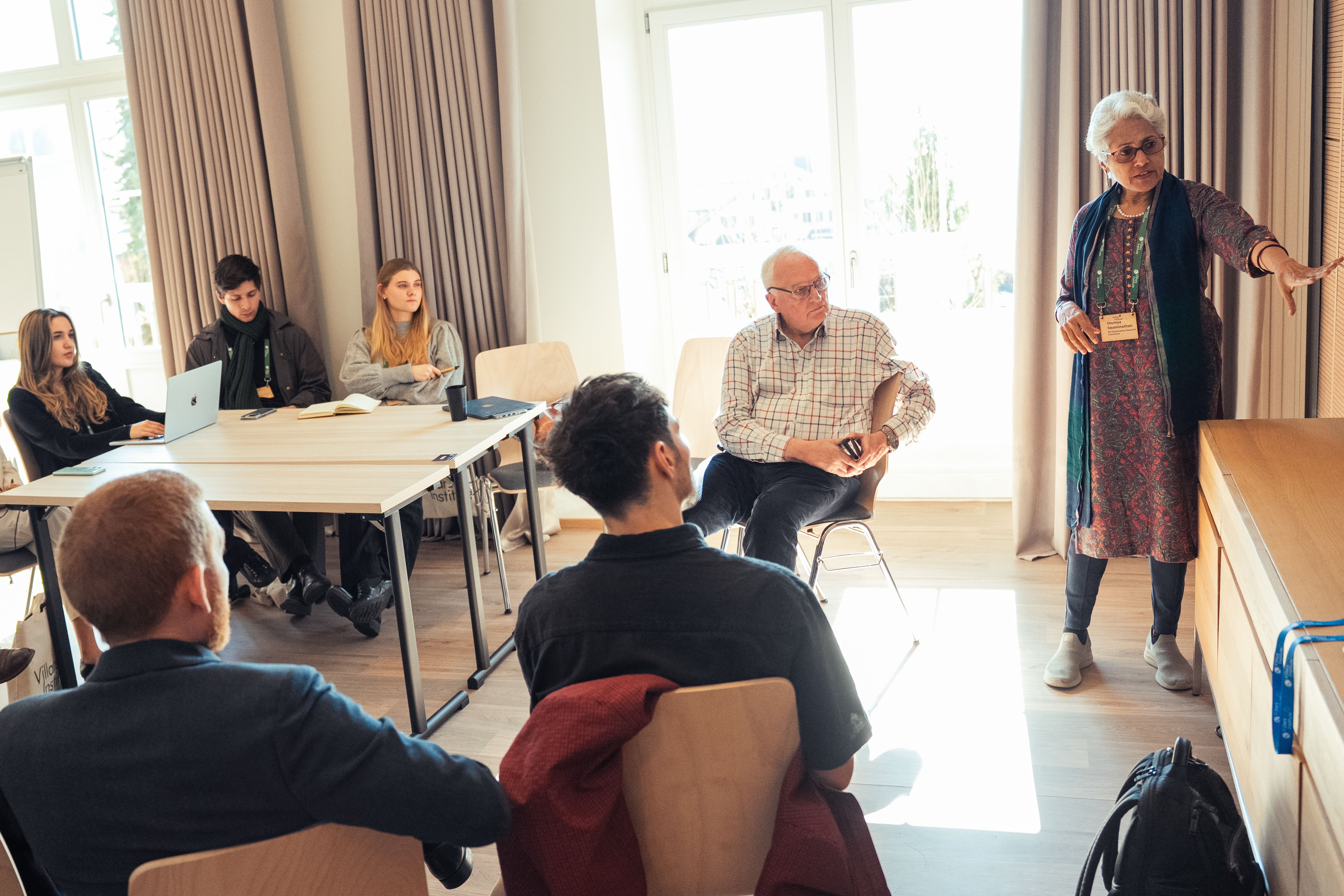
Firstly, the speakers agreed that we cannot pursue the trajectory we are currently on. Severe examples of how climate change directly affects human physical wellbeing were cited, including the Dubai floods in April 2024, Dr Michael Mosley’s death in Greece due to heatstroke, subsurface water loss in Mexico leading to wildlife displacement and crop damage, Indian farmers planting crops at 3 am, the Chennai floods and the 2025 Blatten incident. Speakers emphasised that these events should not come as a surprise and that the time for action is now.
Turning to action, or the lack thereof, the responses of politicians and government organisations were questioned. It was suggested that while these issues are increasingly recognised as too significant to ignore, impactful and transformative initiatives remain limited. Official announcements and warnings are now being disseminated, but it was argued that resources should instead be directed towards rethinking and rebuilding core infrastructure, including community shelter, water efficiency and waste recycling. As one speaker noted: “This is a multi-sectoral problem that demands a multi-sectoral solution, yet different departments do not communicate.” The discussion also highlighted that, since climate change directly affects public health, it should be treated as a matter of national security and stability. Some speakers suggested that delayed action may increase the risk of social unrest and systemic instability. The One health initiativeinitiative was referenced as a promising framework aiming to integrate approaches, but it was noted that it currently lacks sufficient resources to be fully implemented.
Finally, two key fronts were identified as potential levers for change. The first is the promotion of local-level action, enabling solutions tailored to specific environmental and socio-economic contexts. As one speaker remarked: “We have text and information, but not enough action.” The second is action at the international level, involving changes to energy and food supply chains by incentivising stakeholders to act, buy and sell differently. Reference was also made to a hopeful study highlighting how pluralistic ignorance can hinder collective action on climate change.
Insights from the audience
The first intervention focused on how gaps in understanding can be exploited. An example was given from mining regions, where companies offer wages slightly higher than those available in agriculture, while also providing access to addictive substances within company-controlled environments. This dynamic can contribute to cycles of dependency, resulting in the erosion of local knowledge and long-term wellbeing.
Another contribution highlighted the health crisis in Salt Lake City linked to the drying of the Great Salt Lake. The drying lakebed has released toxic substances into the air, posing health risks to surrounding populations, alongside the threat of increasing drought in the coming years. This was contextualised with broader global challenges: 2 billion people lack access to safe drinking water, and that 3 billion people lack access to a healthy diet. Education emerged as a central theme, with several initiatives discussed. These included efforts by scientists to engage with indigenous communities, the introduction of the National Emergency Briefing (https://www.nebriefing.org/) in the UK, and the role of public media institutions such as the BBC in disseminating accessible and reliable information. Participants emphasised that there is a significant opportunity for media organisations to present information in ways that empower citizens. As noted: “It’s how you present it.”
The session concluded with an emphasis on involving local communities in solution design and encouraging participation across all age groups. This was framed as a practical and accessible approach to strengthening collective resilience in the face of long-term challenges.