


Ideas from the speakers
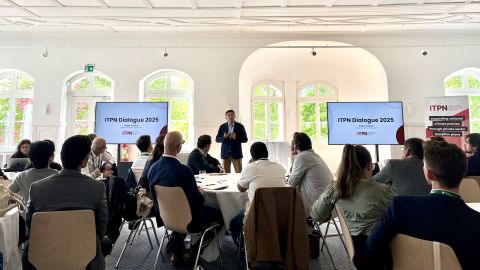
There is so much talk around investing in nature-positive solutions, but why does the majority of capital still flow in the opposite direction? The discussion of “Redirecting Private Capital” centred on the structural misallocation of global capital, emphasising that there is not a lack of capital, but an issue with how it is currently allocated. Despite growing interest in sustainable finance, our speakers highlighted a 30:1 imbalance in capital flows, with 7.3 trillion directed to negative causes and only 220 billion to positive solutions. The central question was: “How do we direct capital at scale?” A key explanation offered by one of our speakers as to why capital is not flowing is that nature is still not properly priced within our financial systems. It was highlighted that the barrier lies in capital flow into demand, reliable price signals and market liquidity, which are aspects that nature-related systems often lack, reinforcing the absence of capital flow. As a result, this creates a dangerous cycle where capital flows into nature-negative activities that harm the environment, not because investors do not want to support nature, but because the reward is not consistent.
In our current system for financing nature, we hear a lot of discussion around carbon markets, and our speakers addressed both the limitations and strengths that come with such a high-demand market. They provide a guide for pricing environmental impact and have picked up momentum. However, markets like these face constant challenges, such as credibility, action when an ecosystem is already under threat, measurement challenges and how reactive these markets can be. In response, our speakers emphasised the need to apply transition finance principles and to start shifting away from smaller, project-based work towards system-level change, to gradually change the direction of the strong current of capital flow. This leads us to ask what a real turning point would look like. How do we encourage private capital to flow into a system that takes nature into account rather than degrading it? We discussed a range of options, and our speakers suggested the ultimate shift would occur when nature is valued as a long-term system worth investing in, rather than as a small sustainability issue. To reach this goal, we would need more than just investment, but also a restructuring of how finance itself operates. This involves blended finance models to integrate private, public and catalytic capital, projects with predictable outcomes and revenue streams, and the use of policy frameworks to create consistent demand. The turning point will be when investing in nature becomes a reliable financial choice, rather than one driven primarily by values.
Insights from the audience
Participants in the audience raised questions challenging some of the ideas presented, especially regarding how reliable these market-based solutions are. Comparisons were made to rapidly scaling financial systems such as cryptocurrencies, and whether those ideas could also be applied to nature. This led to a broader ethical discussion about how nature can be monetised while still being protected. The conversation was less technical and more value-driven, raising concerns about how we can invest in the very systems we are trying to protect.
Moving beyond these broader concepts, there were also challenges related to implementation. One key issue was the geographic misallocation of capital, where investment does not always flow to the most critical ecosystems, with funding often directed towards lower-risk regions rather than where it is most needed. Another theme was how the system tends to focus on ecosystems that have already been restored, rather than investing in their protection beforehand, reflecting a structural issue in existing markets. Looking ahead, there were many unresolved questions and concerns, highlighting both the complexity of the issue and the strong interest in redirecting capital towards nature. There is a challenge in balancing risk and return, particularly when considering early-stage investments, and a tendency to invest in markets that are already proven, rather than taking proactive approaches. There was a shared uncertainty around how to create effective incentives, who should take on early risk, and why. This led to broader questions about whether existing financial systems, such as carbon markets, can evolve or be replaced. While there is increasing clarity around the problem, uncertainty continues to hold back large-scale investment.
Ultimately, the discussion concluded with the recognition that redirecting capital towards nature is not only a technical challenge, but also a systemic one. It requires a shift in how risk, value and responsibility are understood and communicated across the financial system.