
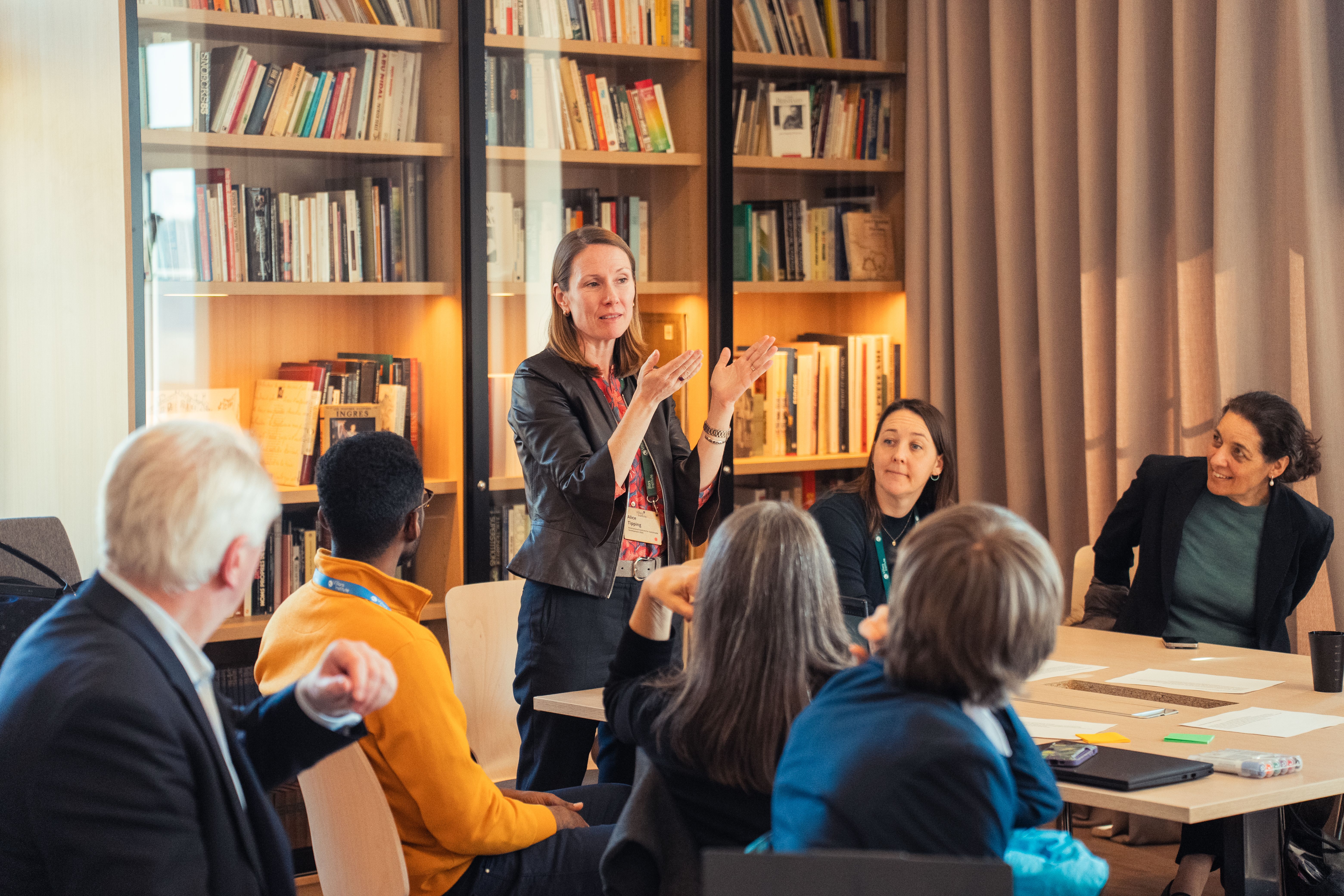


Ideas from the speakers
Governments around the world spend $1.25 trillion every year on subsidies that drive biodiversity loss, climate change and pollution crises. These incentives distort markets, making harmful activities cheaper than their sustainable alternatives. Inequalities are thereby worsened, while large companies and corporations capture most benefits. Additionally, fiscal stability is undermined, risking governments’ ability to maintain a sustainable financial position over the long term. Therefore, the involvement of philanthropy in repurposing the financial system towards sustainable development seems evident.
The first speaker underlined the fact that financial incentives directly shape and define how businesses interact with nature. Governments are currently rewarding destruction rather than protection, preventing sustainable alternatives from having a chance to compete in the market. The disadvantages that nature-based solutions currently face are greatly slowing down our ability to transition into a net-zero economy. Additionally, supply chain risks are created through water pollution, overfishing and other similar practices, which could lead to an inability to produce. Incentives need to be put in the right places to transform sectors. Some successful examples include the subsidisation of solar panels leading to competitive prices, and fossil fuel taxes that now pay landowners in Costa Rica to protect land rather than destroy it. The main barrier that remains, though, is the fear that by removing subsidies we are taking away something from people who now depend on them. So the questions of “how to make this solution compelling” and “what should be put in place to encourage the right action” remain. The second speaker reinforced the points already mentioned and added the importance of supporting national reform efforts. This shift needs significant stakeholder work, as well as narrative-building and effective communication. She also reminded the audience that such a shift is possible, as 166 governments have already agreed to a treaty reforming illegal fishery subsidies. Finally, she emphasised that narratives are what galvanise people to drive change. The following speaker noted the danger of unintended consequences, which subsidies often hold. Nonetheless, she argued that subsidies should be reformed rather than removed. For example, in Colombia, subsidised farmers were allowed to remain subsidised if they shifted towards sustainable practices. This increased the government’s budget long term, as costs from droughts and fires greatly decreased and farmers became more resilient. Such an example shows that it is possible to find “win-win” outcomes for people and the economy.
The final speaker mentioned the danger of externalities and our inability to incorporate natural systems into our economic systems. Unfortunately, the monetary value of living nature does not yet exist, but such a reform could greatly help put incentives in the right direction. For now, harmful subsidies only amplify negative environmental externalities. In other words, our subsidies “accelerate our inability to internalise externalities”. Nonetheless, not all subsidies are bad; in fact, subsidies can and should be used for good.
Insights from the audience
Following the introductory remarks, the room was split into five tables. Each group was given a sector for which they worked on narrative-building to drive change in these communities. Each person at the table roleplayed a stakeholder in that sector. These were the main ideas that came out of the exercise:
In the business sector, participants expressed that the current narrative felt too generic. Instead, affected people needed to be put at the centre of the problem to create empathy. A specific person or role would be needed in order to target specific incentives. The focus on time horizons, such as underlining long-term risks and the need for massive systemic change, was mentioned. Lastly, the importance of a showcase example to provide proof of concept was suggested. The public sector group started by focusing on the need for very clear communication that breaks down benefits for each group. Additionally, the need for complete transparency and alignment was voiced. All stakeholders should also be involved in discussion. Finally, the need to put ideas forward now so that action can start small and scale later was expressed. The conservation sector table discussed the use of a long-term moral imperative. The idea of changing the goal of a subsidy while keeping the beneficiaries the same was reiterated. An interesting observation was raised about Indigenous communities often being overlooked because their value systems are ignored. Lastly, the need to maintain coalitions was mentioned.
In the social justice sector, it was voiced that information needs to be tangible for the public by ensuring people know where money is currently going and suggesting where it should go instead. There is a need to appeal to the benefits that will be derived from changes in the system. Giving concrete elements, deadlines and a roadmap can help the public hold governments accountable for their commitments. The importance of not opening discussions with a problem and lots of jargon was also specified.
Finally, the group of development agencies suggested leaning into the need for reform. Using the narrative of reducing stress on government budgets was considered impactful, especially in smaller economies, as was linking this to the idea of saving taxpayers money. The importance of underlining that people will not lose out from the changes, and will likely benefit, was also raised. The need to build coherence between policies and enable politicians to better follow the money concluded the discussion.