


Ideas from the speakers
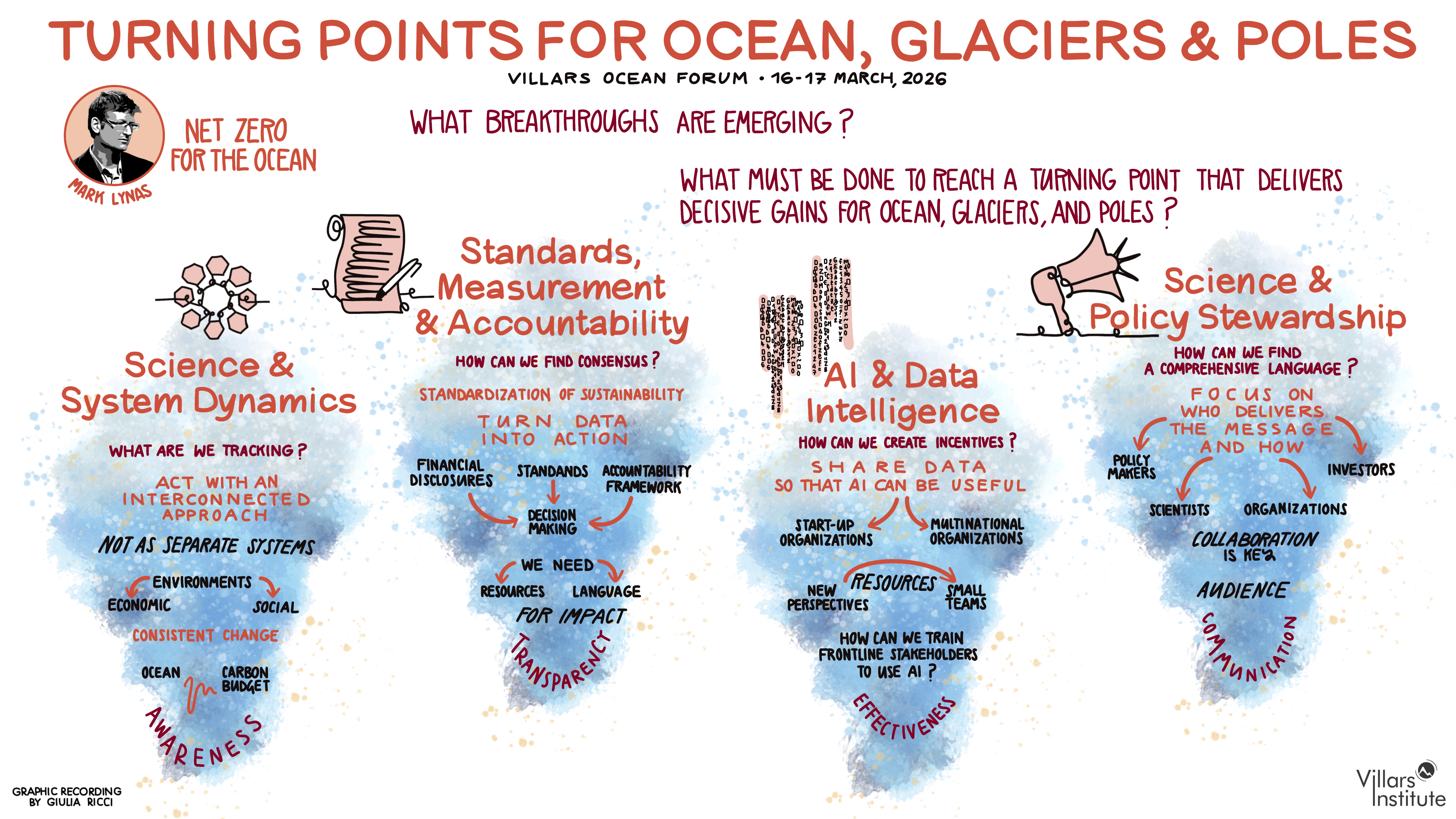
A central theme was the gap between knowledge and action. Speakers emphasised that substantial scientific understanding already exists regarding oceans, glaciers, and related systems. The key challenge is therefore not data availability, but implementation. It was highlighted that current efforts are not aligned with the urgency of the situation, and that further delays risk accelerating systemic change. The interconnected nature of environmental, social, and economic systems was also emphasised, suggesting that isolated interventions are unlikely to be effective.
The role of the ocean in the global carbon cycle was identified as critical. Oceans absorb a significant share of atmospheric carbon and may now act as an even larger carbon sink than terrestrial systems. However, the processes underlying marine carbon storage remain insufficiently understood. In particular, seabed degradation was highlighted as both a risk to carbon storage and a gap in current understanding.
Discussions on standards and accountability pointed to the existence of multiple frameworks designed to translate data into decision-making. However, their impact is limited by fragmentation, low awareness, and inconsistent adoption. The focus should therefore be on scaling and operationalising existing systems rather than creating new ones. The need to define practical entry points and strengthen incentives for adoption was also emphasised.
Artificial intelligence and data intelligence were discussed as both an opportunity and a constraint. While AI has strong potential to enhance analysis and support decision-making, its effectiveness depends on access to shared data. Currently, data remains fragmented, and incentives for sharing are limited. AI was also seen as a tool to support smaller teams by providing additional perspectives, though the absence of clear governance frameworks for its use remains a challenge.
Finally, the interface between science and policy was identified as a key leverage point. The discussion highlighted that the impact of scientific knowledge depends on how it is communicated. Developing a clear and accessible language for policymakers, investors, and the public was seen as essential to enable coordinated action.
Insights from the audience
Audience discussions focused on the practical challenges of implementation. A recurring theme was the role of incentives, particularly in relation to data sharing and the adoption of standards. Participants questioned whether regulatory approaches, market-based incentives, or collaborative models would be most effective, with no clear consensus emerging.
Debate also centred on the governance of artificial intelligence. While its potential was widely recognised, participants highlighted the difficulty of defining policies in a rapidly evolving context. Questions were raised around whether minimum standards should be introduced and how such frameworks could remain flexible over time.
Participants further highlighted the fragmentation of current efforts, with many organisations working in parallel rather than in coordination. This raised the need for shared tools, common approaches, and stronger system-level alignment to accelerate progress.
Capacity and inclusion were also discussed as key challenges. Effective implementation requires not only technological solutions but also the ability of organisations and stakeholders to use them. This includes building literacy in data and AI, as well as ensuring broader participation in decision-making processes.
Finally, participants emphasised that knowledge often fails to translate into action due to communication gaps. Improving how insights are conveyed to decision-makers was seen as critical.
Overall, the discussion underscored that the primary barriers are not a lack of ideas, but challenges related to coordination, incentives, and implementation. Addressing these will be essential to enable meaningful progress in protecting ocean and polar systems.