
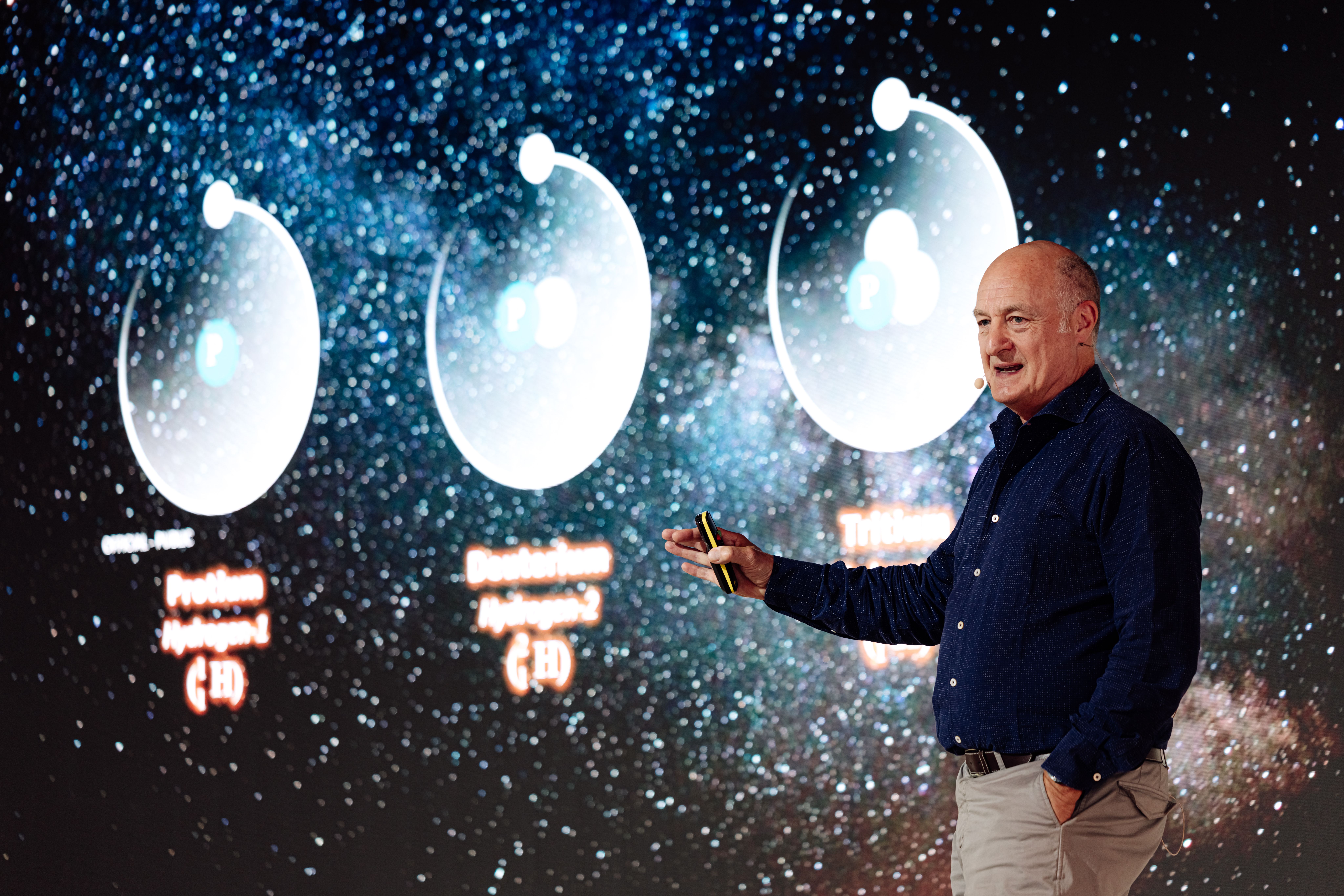



Energy from fusion is amongst the options being developed to address this need. Unlike nuclear fission which creates energy from splitting atoms, fusion energy derives from atoms being forced together: a much safer process. Governments are investing billions of dollars, alongside a growing number of fusion companies backed by billionaires including Bill Gates and Jeff Bezos, and numbers of venture capital firms. Leading fusion firms include Commonwealth Fusion Systems, Tokamak Energy, Proxima and Marvel Fusion.
Fusion has huge potential
Briefly, fusion energy has the potential to be reliable and not dependent, for example, on weather conditions, and abundant in that core fuels are found in water. It holds the possibility of being efficient in its power density such that theoretically 1kg of fusion fuel is equivalent to 4kg of nuclear fission fuel and 4 million kg of fossil fuel; clean being low-carbon and low land use; safe as it is readily and safely controllable; and limitless in the manner in which a feedback loop in its operation could produce its own fuel.
It faces enormous challenges
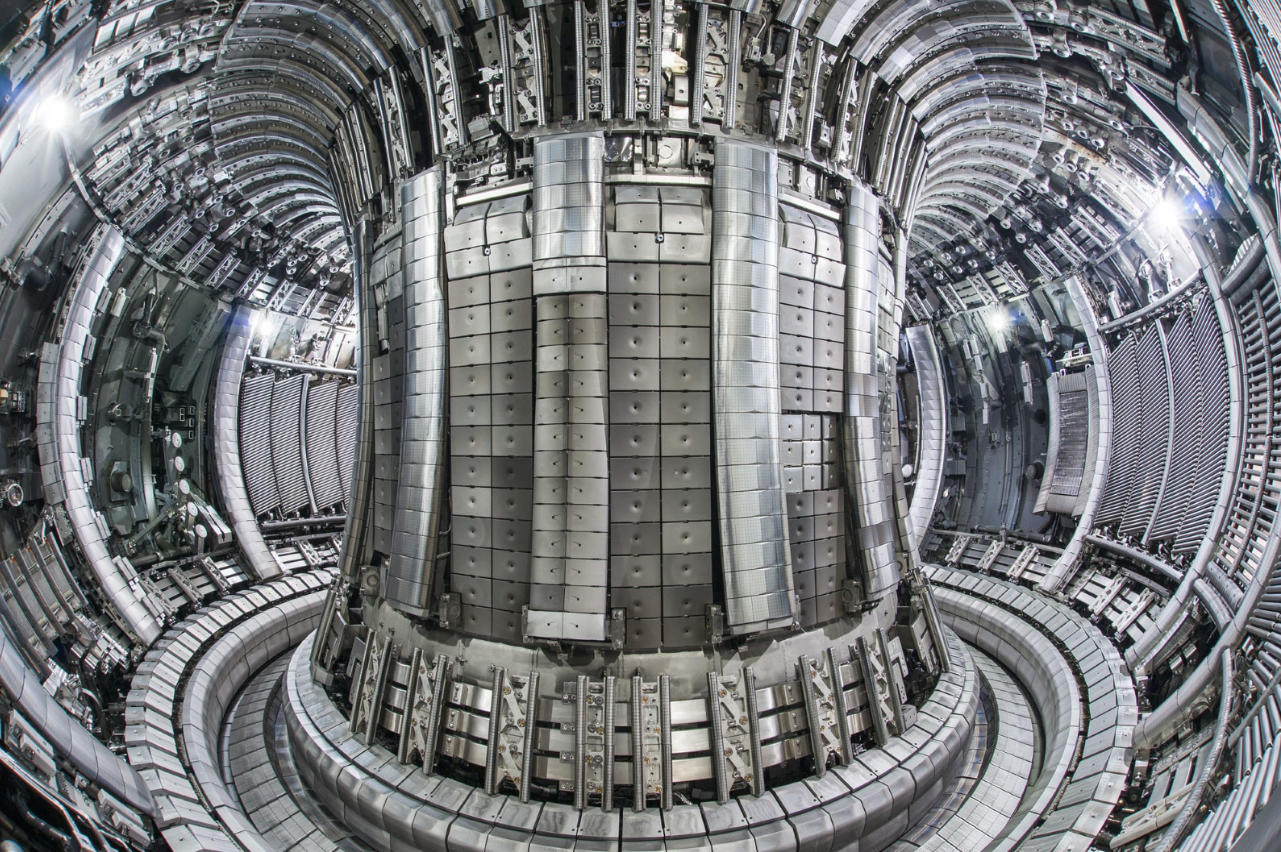
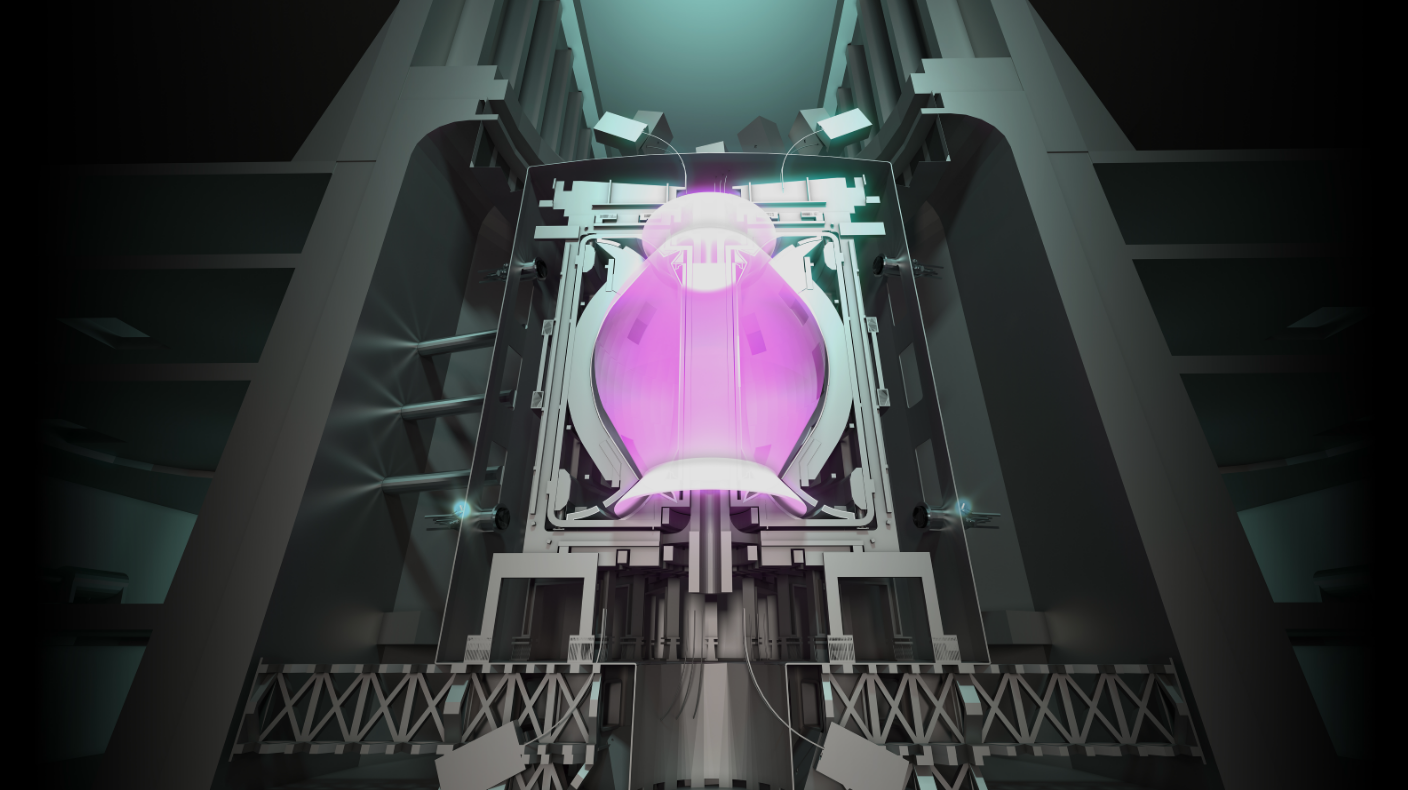
Significant challenges have to be addressed before fusion can contribute as a source of clean energy. Fusion machines are highly complex, and different designs are being explored. They include tokamaks, which use powerful magnets to contain the high temperatures of plasma needed for particles to fuse to produce energy. These temperatures can exceed 150 million degrees Celsius necessary for fusion to occur, which is ten times hotter than the centre of the Sun. And they include inertial confinement, which uses some of the most powerful lasers in the world to compress fuel capsules. A key challenge is the production of a fuel, tritium. Despite the many profound engineering difficulties faced, records of the duration of fusion reactions produced are regularly being announced, including most recently in China and France. Realistically, however, it is unlikely that fusion will produce energy commercially this decade. For a compendium of some of the developments in fusion see: (www.fusionenergybase.com/)
There are large international investments, but different approaches
Based on decades of basic research, efforts to produce fusion energy commercially are being pursued around the world. Leaders in the field include the USA, China, and the UK, and Germany, Japan, and Korea have significant investments. France is home to ITER, one of the world’s largest scientific projects. There are broadly different approaches taken towards getting fusion energy into use in electricity grids and as a direct source of power. Although the situation is fluid and changing, the USA’s approach, for example, places emphasis on private sector firms linking back into the science base; China is state-led, with encouragement for start-ups aiming to move fusion research into commercial use; the UK is building on its strong research base with public-private partnership.
Advantages will lie with nations capable of making large, long-term, risk-taking investments, although these can have different characteristics. China has the benefit of scale and lengthy time horizons in its investments and highly advanced manufacturing capabilities; the USA has a long tradition of successful technological entrepreneurship and world-leading capital markets attuned to risk taking. China can be argued to lack the dynamism that can be provided by entrepreneurial start-ups in the field, although these are being established, especially around its centres of fusion research. The USA’s recent approach to scientific research and enthusiasm for fossil fuels begs the question of whether its leadership in fusion will be maintained.
The UK’s leadership in this field is built on its being home to the world’s most pre-eminent fusion machine, the Joint European Torus, and much was learned from its 40 years of operation and at present from its decommissioning. The UK was the first nation in the world to develop an industrial strategy and appropriate regulatory framework for fusion, and much depends on the success of its flagship, UK Fusion Energy, which is developing a prototype commercial fusion machine.
The different models of commercialisation are to be welcomed. There probably will not be a winner-takes-all in the ‘race’ to develop fusion, but rewards lie in both seriously competing for first-mover advantages and learning and leveraging from international collaboration. Benefits have already accrued from fusion-related technologies in fields such as health, digital design and manufacturing, and robotics: technologies of value for other sustainable energy sources. By being highly demanding, investments in the science and engineering of fusion increases the capabilities of industries that contribute to it.
What will determine success?
After 75 years of research, fusion energy is at an inflexion point with the possibility of rapid acceleration into commercial use. The viability of fusion energy will depend on its economics: the cost of developing and building fusion machines and the fully accounted price of their energy provision compared to alternatives. Much will depend on the effectiveness of fusion innovation ecosystems, involving scientists in research laboratories and universities, governments as investors and regulators, and large and small firms, all working effectively at combining their existing and developing skills and capabilities.
If fusion energy is to be viable, to be economical and sustainable, a fusion industry needs to be created. On the supply side this will involve innovative small firms producing new components and systems and offering new services, and large construction and engineering firms capable of building highly complex machines integrated into power supply systems. The USA’s record in the former, China’s massive industrial strength, and research expertise in nations including Korea, Japan, Germany, the UK and France, will convey advantages, and point to the value of international collaboration leveraging distinctive strengths. The skills of systems integration will be critical.
Fusion will not have a short-term impact on today’s energy challenges, nor is its contribution guaranteed, but it is one of the very few high potential new sources of energy that could make an invaluable contribution in decades to come to dealing with an existential threat. Our current energy mix imperils human existence. Simply, everything needs to be thrown at this challenge to humanity, including the development of fusion energy.