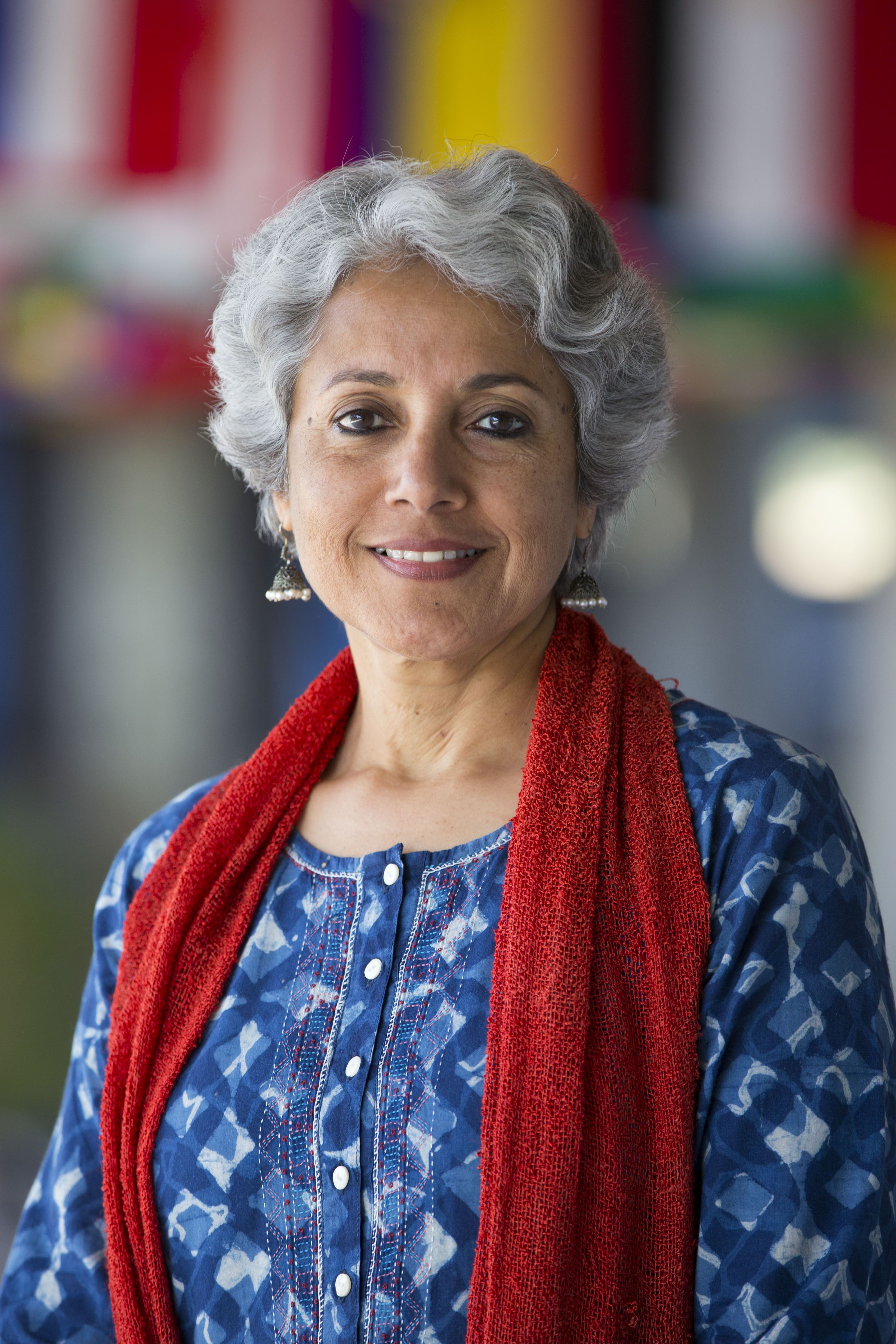

For Soumya Swaminathan, human wellbeing is inextricably linked with the health of the planet. It’s a logic that butts against the relentless consumption of late-stage capitalism, but as Chair of the MS Swaminathan Research Foundation, she is pushing for a different kind of world order, predicated on natural balance and positive outcomes for the many, not just the few.
Set up by her father, agricultural scientist Dr. M S Swaminathan, the Foundation’s work is rooted in the concept of ‘biohappiness,’ a challenge to traditional indexes of progress such as GDP that ignore nature, ecology, and food systems in their metrics.
Biohappiness takes a more holistic perspective and proposes that wellbeing actually depends on healthy ecosystems – and integrating ecology, health, equity, good nutrition and sustainable livelihoods is the measurement of real growth.
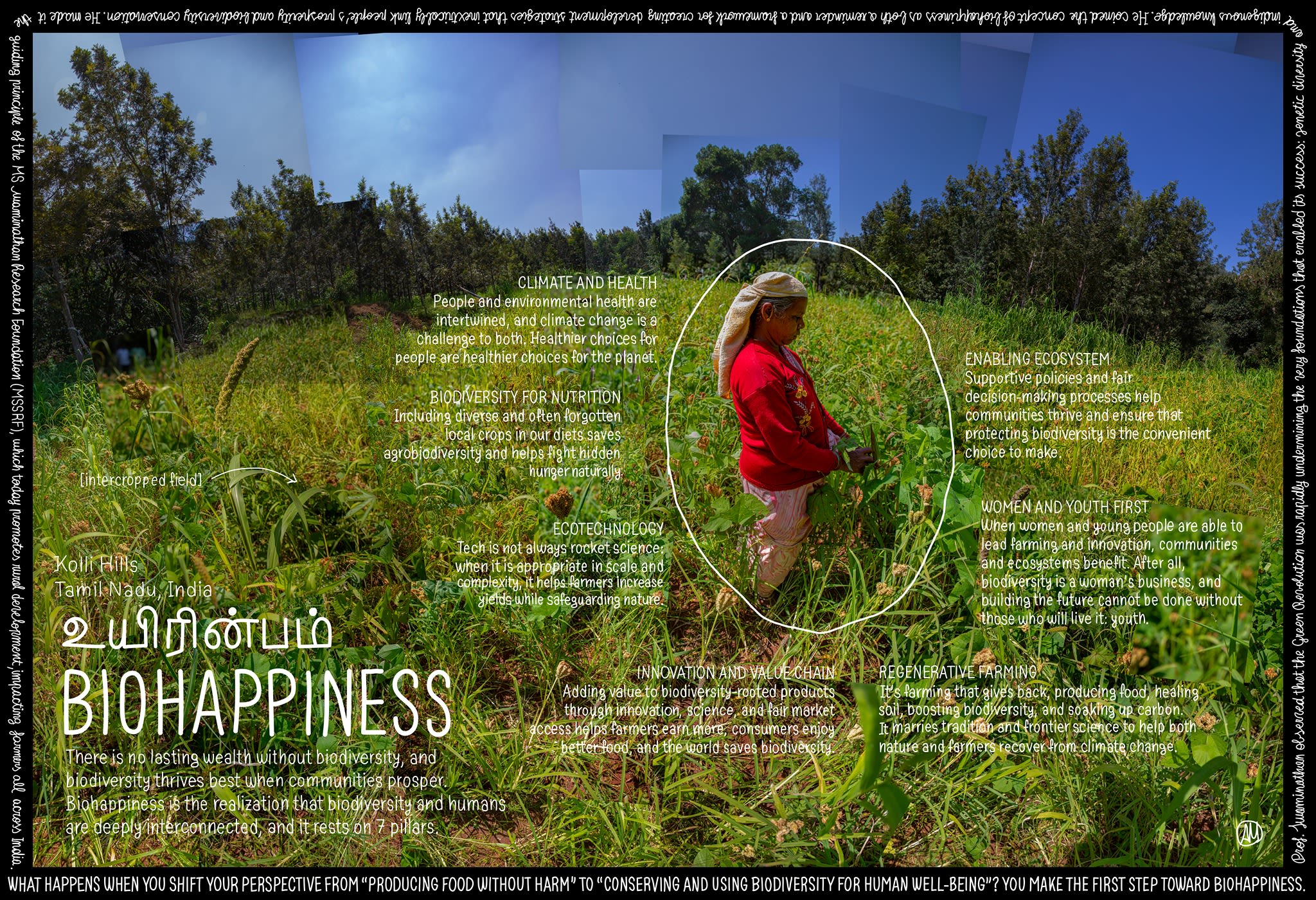
Image courtesy of MS Swaminathan Research Foundation; visual by The Lexicon
Ecology at the centre
For Swaminathan, global challenges such as climate change, biodiversity loss and pollution cannot be solved in isolation. They are deeply interconnected; climate change, extreme weather events and monoculture in food production have an impact on environmental biodiversity and soil quality, as well as food security and nutrition. Inequality is marbled through all challenges; from women and vulnerable communities disproportionately affected by climate emergencies to issues of pandemics and global vaccine access.
The call, then, is to redefine the concept of progress. For Swaminathan, that means creating solutions around ecology in order to support better nutritional and health outcomes, as well as sustainable livelihoods and wider equality.
Interconnected challenges, integrated solutions
If the world is to meet its challenges and be fit for more than just a handful of billionaires to live in, there must be global acceptance that the only sensible, sustainable aim is a balance between people, planet and prosperity. Complex global challenges require a systems-thinking approach that addresses problems holistically, says Swaminathan.
Such an approach highlights the limitations of siloed approaches between countries and puts the natural resources we all share and depend on in the centre. An integrated framework is essential for understanding that healthier choices equal sustainable choices – and the shifts in policy and collaboration that are needed to effect real change.
Measuring this also means a systemic shift from indicators of economic growth such as GDP to what Swaminathan calls a “biohappiness index” of environmental health, social wellbeing and sustainability.
“So many problems, so many solutions…”
But the real challenge for her is scale, and the gap between local successes and global deployment. Around the world, innovative, community-led initiatives restore ecosystems, support livelihoods and improve health outcomes. Yet they often remain limited by the investment, political will or coordination.
The biohappiness recalibration ultimately asks us to consider balance over excess, connection over isolation, sustainability over speed. Importantly, it’s a powerful reminder that wellbeing is not something we achieve in isolation but build together and in relationship with the world around us.
Seven interconnected challenges for biohappiness…
Climate and Health
The World Economic Forum’s Global risk report shows environmental risks will become increasingly impactful over the next 10 years, with biodiversity loss, climatic events and the increase in risk factors such as AI and misinformation.
Moreover, for many, extreme weather is now “part of life,” especially in developing regions, where its increasing regularity is to some extent becoming normalised, along with concurrent health outcomes – from heat-related issues to malnutrition and non-communicable diseases in the wake of typhoons or floods. Environmental degradation, therefore, is not only an ecological issue but also a social and ethical one. “Unless we see climate change as an issue impacting our health today, we’re not going to act,’ asserts Swaminathan. That knowledge is even more impactful in context and supported by wider community initiatives.
“We run a programme with Microsoft using hyperspectral analysis to quantitate the blue carbon along the Tamil Nadu coast. The community there is one of the most marginalised of what we call ‘scheduled tribes’ so we realised we had to do a more holistic intervention, adding in health, education and livelihood.
“As part of that, we set up computer labs for local children because democratisation of knowledge is one of the ways to empower people who have been denied the opportunity. But then the local women who are traditional prawn fishers told us how much blood they lose because of all the scratches and injuries, and just providing gum boots and goggles has also made a huge difference to them.”
Inequality and vulnerability
Swaminathan describes inequality as “the most interconnected risk,” influencing outcomes across health, environment and economic systems, and particularly evident in climate-related events.
“[Climate impact] will depend on who you are, where you are, what your exposure is, and what your capacity is to withstand or adapt to these changes,” she says. “The most vulnerable are always worst impacted by extreme weather events.”
Such observations demonstrate that crises disproportionately affect those with the least capacity to adapt, reinforcing cycles of disadvantage. Addressing inequality is therefore not only a moral imperative but also essential for effective global resilience.
Gender inequality and agriculture
‘Women now constitute more than half of the agricultural workforce, yet equipment and incentive schemes are still made for men,” notes Swaminathan, highlighting systemic biases in policy and technology design. Furthermore, “only 15 per cent of land ownership is in the name of women,” limiting their access to credit and resources.
Changing the landscape for women through land rights, financial inclusion and education is essential for both equity and agricultural productivity.
Swaminathan is pushing for legal change. “This year we want to get the Indian Government to enact a law entitling women farmers to get access to credit, loans, water and all the things that men have access to because their name is on the property.”
“Organising farmers and women especially is a real way of empowering them. There are a lot of self-help groups in India, and if we bring them together and form a federation then they can be even more powerful. Then they can pool resources to get access to credit and loans, and with the right technology – and digital and financial literacy – they can go a long way.”
Conservation and sustainable livelihoods
“It’s never indigenous and local communities that destroy nature,” says Swaminathan. “It’s always people who come in from the outside, or with outdated ideas, or because they want to use that land for something else.”
As such, it’s crucial to empower local communities to be stewards of biodiversity. Crucially, though, she stresses that “conservation without attention to livelihoods is not a viable proposition in areas where people are poor.”
“You can’t tell people to stay out of the forest, because ‘it’s important to conserve species’ – but we don’t care what’s happening to you.”
Sustainability must align with economic needs to be effective and equitable. And again, integrated solutions are key– using traditional and scientific knowledge and technology with livelihood opportunities to be able to create community-based approaches that achieve both ecological protection and social development.
Food systems and nutrition
The modern global food system with its lack of diversity and resilience is not futureproofed, warns Swaminathan. Narrowing agricultural diversity, with its increasing dependence on rice, wheat and maize, means that while global production is ‘sufficient,’ access to nutrition remains unequal.
“The world has enough food for everyone, but the proportion of the population unable to afford a healthy diet is around two-and-a-half billion people.”
This paradox highlights the structural inequalities in food distribution and affordability. We need to think again about what is produced, for whom and why. A return to diverse, climate-resilient crops and local food systems as a means of improving both nutrition and sustainability is needed, argues Swaminathan, who highlights the success of projects such as community seed banks to preserve diversity and a mangrove restoration programme in India to increase tsunami protection.
Air pollution and global health
Nine out of 10 people in the world today breathe air that does not meet WHO standards, and this pollution is responsible for eight million deaths globally, higher than tobacco. Air quality Swaminathan asserts is a major, yet under-recognised, global health emergency. Low-and middle-income countries in Asia and Africa face the highest burden of air pollution, but the world’s biggest “shared asset” is an issue that cannot be solved behind country borders and without multi-sectoral action.
“Like viruses, you can’t contain air within national boundaries, so you need to work together to deal with pollution,” says Swanithanan. “We blame each other or we blame farmers burning things…we’re always blaming someone. But really, it’s a structural problem, and a lot to do with the way cities and public transport systems are designed and the lack of implementation of environmental guidelines.”
Pandemic lessons and global cooperation
Reflecting on her experience during the Covid pandemic, Swaminathan notes the strengths and weaknesses of global systems in addressing the social, economic and environmental determinants of health. In particular, she focuses on a critical tension between scientific progress and political realities. “During the pandemic as India’s Chief Scientist, I saw first-hand what science and technology could achieve, and how vaccines and diagnostics could be developed at record speed.
“Scientists in private and public sectors around the world came together with one mission. But I also saw also the ugly side of vaccines, in terms of nationalism, inequity and fragmentation and people not being able to agree – and still not able to agree – on how a future pandemic could be managed better than the last one was.”
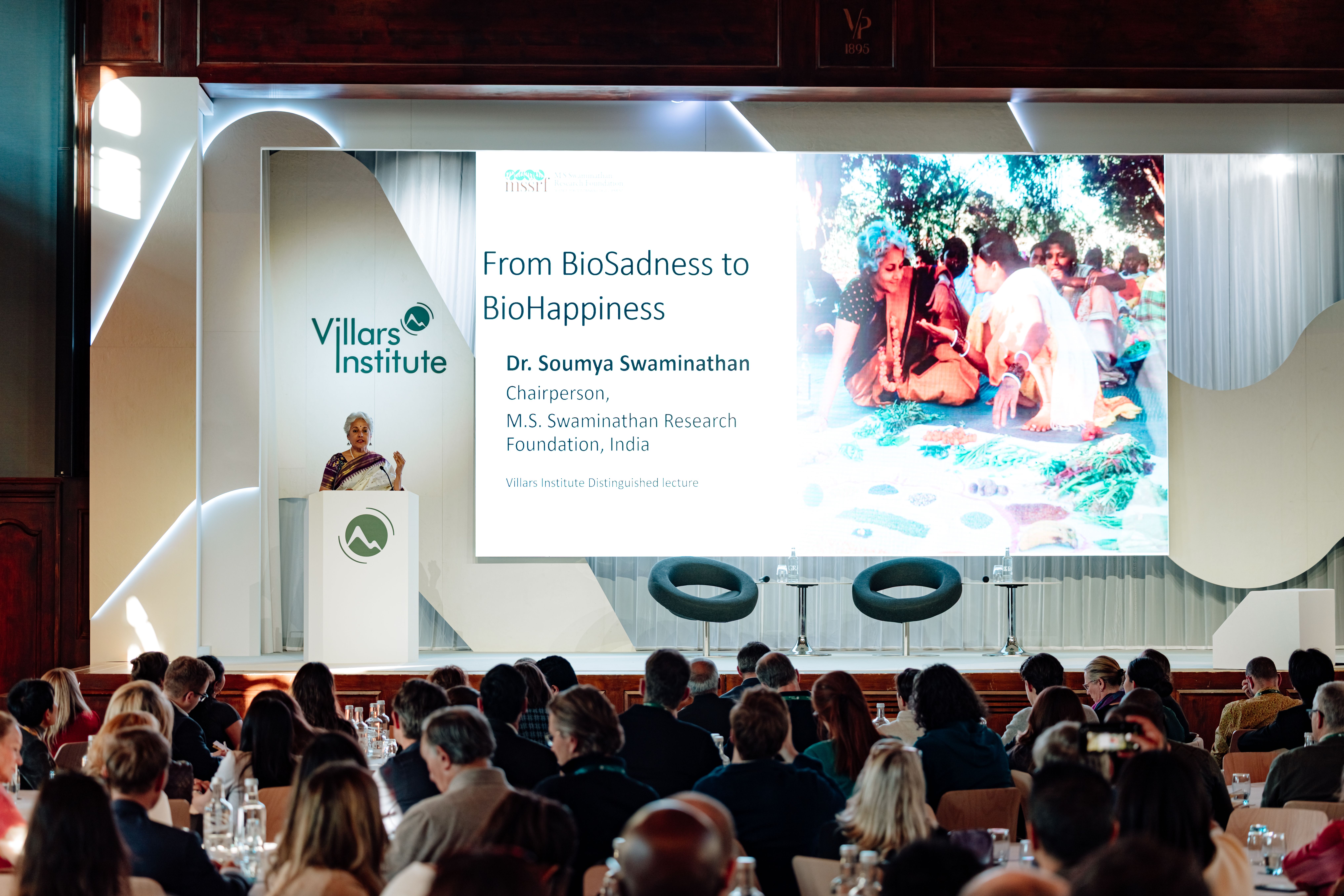
Dr. Soumya Swaminathan’s lecture is one of a growing series of Villars Institute Distinguished Lectures, where world-leading voices share insights on building a more sustainable and equitable future. Discover more perspectives: